People’s Republic of China (PRC) Yangtze River Protection Law


        Chapter I General Principles

    Article 1 This Law is formulated with a view to strengthening the protection and restoration of the ecological environment in the Yangtze River Basin, promoting the rational and efficient utilization of resources, ensuring ecological security, and realizing the harmonious coexistence between man and nature and the sustainable development of the Chinese nation.

        Article 2 This Law shall be observed in the protection and restoration of the ecological environment and in all kinds of production, living, development and construction activities in the Yangtze River Basin.

        The term "Yangtze River Basin" as mentioned in this Law refers to the relevant county-level administrative regions of Qinghai Province, Sichuan Province, Xizang Autonomous Region Province, Yunnan Province, Chongqing City, Hubei Province, Hunan Province, Jiangxi Province, Anhui Province, Jiangsu Province and Shanghai, as well as Gansu Province, Shaanxi Province, Henan Province, Guizhou Province, Guangxi Zhuang Autonomous Region, Guangdong Province, Zhejiang Province and Fujian Province.

        Article 3 In the economic and social development of the Yangtze River Basin, we should adhere to ecological priority and green development, and make great efforts to protect and not to develop. The protection of the Yangtze River should adhere to overall coordination, scientific planning, innovation-driven and systematic governance.

        Article 4 The State shall establish a coordination mechanism for the Yangtze River basin, give unified guidance and overall coordination to the Yangtze River protection work, review major policies and plans for the Yangtze River protection, coordinate major issues across regions and departments, and supervise and inspect the implementation of the important work for the Yangtze River protection.

        Article 5 The relevant departments of the State Council and the people’s governments at the provincial level in the Yangtze River Basin shall be responsible for implementing the decision of the national Yangtze River Basin coordination mechanism, and shall be responsible for the work related to the protection of the Yangtze River in accordance with the division of responsibilities.

        The local people’s governments at all levels in the Yangtze River Basin shall carry out the responsibilities of protecting and restoring the ecological environment in their respective administrative areas, promoting the rational and efficient utilization of resources, optimizing the industrial structure and layout, and maintaining the ecological security of the Yangtze River Basin.

        The heads of rivers and lakes at all levels in the Yangtze River basin are responsible for the protection of the Yangtze River.

        Article 6 Relevant places in the Yangtze River Basin shall, according to needs, establish cooperation mechanisms in the formulation of local laws and government regulations, planning, supervision and law enforcement, etc., so as to jointly promote the protection and restoration of the ecological environment in the Yangtze River Basin.

        Article 7 The relevant departments in charge of ecological environment, natural resources, water administration, agriculture and rural areas and standardization in the State Council shall, in accordance with the division of responsibilities, establish and improve the standard systems of water environment quality and pollutant discharge, ecological environment restoration, water resource conservation and intensive utilization, ecological flow, biodiversity protection, aquaculture, disaster prevention and mitigation in the Yangtze River basin.

        Article 8 The competent department of natural resources in the State Council shall, jointly with the relevant departments in the State Council, regularly organize surveys on the natural resources in the Yangtze River basin, such as land, minerals, water, forests, grasslands, wetlands, etc., establish a basic database of resources, carry out evaluation on the carrying capacity of resources and environment, and announce the natural resources in the Yangtze River basin to the public.

        The department in charge of wildlife protection in the State Council shall organize a general survey of wildlife and its habitat every ten years, or organize a special investigation according to the needs, establish a wildlife resource file, and announce the wildlife resources in the Yangtze River basin to the public.

        The competent agricultural and rural departments of the local people’s governments at or above the county level in the Yangtze River Basin shall, jointly with the relevant departments of the people’s governments at the corresponding levels, conduct biodiversity surveys on important habitats such as spawning grounds, feeding grounds, wintering grounds and migration routes for aquatic organisms.

        Article 9 The national coordination mechanism for the Yangtze River Basin shall coordinate the relevant departments of the State Council to improve the monitoring network system and monitoring information sharing mechanism for the ecological environment, resources, hydrology, meteorology, shipping and natural disasters in the Yangtze River Basin on the basis of established stations and monitoring projects.

        The relevant departments of the State Council and the local people’s governments at or above the county level in the Yangtze River Basin and their relevant departments shall, in accordance with the division of responsibilities, organize and improve the ecological environment risk reporting and early warning mechanism.

        Article 10 The competent department of ecology and environment of the State Council shall, jointly with the relevant departments of the State Council and the people’s government at the provincial level in the Yangtze River Basin, establish and improve the emergency linkage mechanism for sudden ecological and environmental incidents in the Yangtze River Basin, link up with the national emergency response system, and strengthen the emergency management of sudden ecological and environmental incidents in ships, ports, mines, chemical plants and tailings ponds in the Yangtze River Basin.

        Article 11 The State shall strengthen the construction of monitoring, forecasting, early warning, defense, emergency response and recovery and reconstruction systems for floods, droughts, forest and grassland fires, geological disasters and earthquakes in the Yangtze River basin, so as to improve the ability of disaster prevention, mitigation, resilience and relief.

        Article 12 The National Yangtze River Basin Coordination Mechanism shall set up an expert advisory committee to organize professional institutions and personnel to carry out scientific and technical professional consultation on major development strategies, policies and plans of the Yangtze River Basin.

        The relevant departments of the State Council and the people’s governments at the provincial level in the Yangtze River Basin and their relevant departments shall, in accordance with the division of responsibilities, organize the third-party assessment, analysis and demonstration of the impacts of Yangtze River Basin construction projects, important infrastructure and industrial layout planning on the Yangtze River Basin ecosystem.

        Thirteenth national Yangtze River basin coordination mechanism to coordinate the relevant departments of the State Council and the people’s governments at the provincial level to establish and improve the Yangtze River basin information sharing system. The relevant departments of the State Council and the people’s governments at the provincial level in the Yangtze River Basin and their relevant departments shall, in accordance with the provisions, share information on the ecological environment, natural resources and management and law enforcement in the Yangtze River Basin.

        Fourteenth relevant departments of the State Council and the local people’s governments at or above the county level in the Yangtze River Basin and their relevant departments should strengthen the publicity and education of ecological environment protection and green development in the Yangtze River Basin.

        The news media should take various forms to carry out publicity and education on ecological environment protection and green development in the Yangtze River basin, and supervise the illegal acts by public opinion according to law.

        Article 15 The relevant departments of the State Council and the local people’s governments at or above the county level in the Yangtze River Basin and their relevant departments shall take measures to protect the famous historical and cultural cities, towns and villages in the Yangtze River Basin, strengthen the protection of cultural heritage in the Yangtze River Basin, and inherit and carry forward the excellent characteristic culture in the Yangtze River Basin.

        Article 16 The State encourages and supports units and individuals to participate in the activities of protecting and restoring the ecological environment, rationally utilizing resources and promoting green development in the Yangtze River basin.

        Units and individuals that have made outstanding contributions to the protection of the Yangtze River shall be commended and rewarded by the people’s governments at or above the county level and their relevant departments in accordance with the relevant provisions of the state.

        Chapter II Planning and Control

        Article 17 The State shall establish a planning system for the Yangtze River basin under the guidance of national development planning, based on spatial planning, supported by special planning and regional planning, and give full play to the leading, guiding and restraining role of planning in promoting the ecological environment protection and green development of the Yangtze River basin.

        Eighteenth the State Council and the local people’s governments at or above the county level in the Yangtze River Basin shall incorporate the protection of the Yangtze River into the national economic and social development plan.

        The development and reform department of the State Council, together with the relevant departments of the State Council, worked out the development plan of the Yangtze River Basin, scientifically coordinated the ecological environment protection and green development of the upper and lower reaches, left and right banks, main tributaries of the Yangtze River Basin, and implemented it after being approved by the State Council.

        Water resources planning and ecological environment protection planning in the Yangtze River basin shall be compiled in accordance with the provisions of relevant laws and administrative regulations.

        Article 19 The competent department of natural resources of the State Council shall, jointly with the relevant departments of the State Council, organize the compilation of the land spatial planning of the Yangtze River Basin, scientifically and orderly arrange the functional spaces of ecology, agriculture and towns in the Yangtze River Basin, delimit the red line of ecological protection, permanent basic farmland and urban development boundaries, optimize the land spatial structure and layout, and guide the land spatial utilization tasks of the Yangtze River Basin, which shall be implemented after being approved by the State Council. The special planning involving the use of land and space in the Yangtze River Basin should be linked with the land and space planning in the Yangtze River Basin.

        The local people’s governments at or above the county level in the Yangtze River Basin shall organize the compilation of the land spatial planning of their respective administrative areas, and implement it after being submitted for approval in accordance with the prescribed procedures.

        Article 20 The State shall exercise use control over the land space in the Yangtze River Basin. The competent departments of natural resources of the local people’s governments at or above the county level in the Yangtze River Basin shall, in accordance with the land space planning, exercise zoning and classified use control over the land space of the Yangtze River Basin under their jurisdiction.

        The development and utilization activities of land space in the Yangtze River Basin shall meet the requirements of land space use control and obtain planning permission according to law. The competent department of natural resources of the people’s government at or above the county level shall not apply for planning permission if it does not meet the requirements for the control of land and space use.

        Twenty-first the State Council water administrative departments to co-ordinate the rational allocation, unified scheduling and efficient utilization of water resources in the Yangtze River basin, and organize the implementation of the total water intake control and consumption intensity control management system.

        The competent department of ecological environment in the State Council shall, according to the water environment quality improvement objectives and water pollution prevention and control requirements, determine the total emission control indicators of key pollutants in the provincial administrative regions of the Yangtze River Basin. In the water functional areas where the water quality in the Yangtze River basin exceeds the standard, stricter requirements for reducing the total amount of pollutant discharge should be implemented. Enterprises and institutions shall, in accordance with the requirements, take measures to control the total discharge of pollutants.

        The competent department of natural resources in the State Council is responsible for the overall planning and control of the total amount of new construction land in the Yangtze River Basin.

        Twenty-second people’s governments at the provincial level in the Yangtze River Basin shall, according to the ecological environment and the utilization of resources in their respective administrative areas, formulate the ecological environment zoning control scheme and the ecological environment access list, and report them to the competent department of ecological environment in the State Council for the record before implementation. Eco-environmental zoning control scheme and eco-environmental access list should be connected with national land spatial planning.

        The industrial structure and layout of the Yangtze River basin should be adapted to the carrying capacity of the Yangtze River basin ecosystem and resources and environment. It is forbidden to lay out industries that have a serious impact on the ecosystem in key ecological function areas of the Yangtze River Basin. It is forbidden for heavily polluting enterprises and projects to transfer to the middle and upper reaches of the Yangtze River.

        Article 23 The State strengthens the management of the development and utilization of hydropower resources in the Yangtze River basin. Because of the national development strategy and the needs of the national economy and people’s livelihood, the construction of large and medium-sized hydropower projects in the Yangtze River basin shall be scientifically demonstrated and reported to the departments authorized by the State Council or the State Council for approval.

        The local people’s governments at or above the county level shall organize classified rectification or take measures to gradually withdraw from the small hydropower projects built in the Yangtze River basin that do not meet the requirements of ecological protection.

        Article 24 The state strictly protects the sources of the main stream and important tributaries of the Yangtze River, and establishes national parks and other nature reserves to protect the national ecological security barrier.

        Twenty-fifth the State Council water administrative departments to strengthen the protection of rivers and lakes in the Yangtze River basin. The local people’s governments at or above the county level in the Yangtze River Basin are responsible for delineating the scope of management of rivers and lakes, and announcing it to the public, implementing strict protection of rivers and lakes, and prohibiting illegal occupation of rivers and lakes.

        Article 26 The State exercises special control over the shoreline of rivers and lakes in the Yangtze River basin. The National Yangtze River Basin Coordination Mechanism coordinates the departments of natural resources, water administration, ecological environment, housing and urban and rural construction, agriculture and rural areas, transportation, forestry and grassland in the State Council, and the people’s governments at the provincial level in the Yangtze River Basin to delimit the protection scope of river and lake shorelines, formulate protection plans for river and lake shorelines, strictly control the development and construction of shorelines, and promote the rational and efficient utilization of shorelines.

        It is forbidden to build or expand chemical parks and chemical projects within one kilometer of the coastline of the main tributaries of the Yangtze River.

        It is forbidden to build, rebuild or expand tailings ponds within three kilometers of the coastline of the main stream of the Yangtze River and one kilometer of the coastline of important tributaries; However, the reconstruction for the purpose of improving safety and ecological environment protection is excluded.

        Article 27 The transportation department of the State Council shall, jointly with the departments in charge of natural resources, water administration, ecological environment, agriculture and rural areas, forestry and grassland of the State Council, scientifically delimit the prohibited navigation areas and restricted navigation areas in the important habitats of aquatic organisms in the Yangtze River basin.

        It is forbidden for ships to sail in the designated no-navigation areas. Because of the national development strategy and the needs of the national economy and the people’s livelihood, sailing in areas where navigation is prohibited in important habitats of aquatic organisms shall be agreed by the competent department of transportation in the State Council in consultation with the competent department of agriculture and rural areas in the State Council, and necessary measures shall be taken to reduce the interference to important aquatic organisms.

        Strictly restrict the implementation of waterway regulation projects in the red line of ecological protection, nature reserves and important habitats of aquatic organisms in the Yangtze River basin; If rectification is really necessary, it shall be scientifically demonstrated and relevant procedures shall be handled according to law.

        Article 28 The State establishes a planning and licensing system for sand mining in the Yangtze River basin. Sand mining in the Yangtze River basin shall be licensed by the water administrative department of the State Council, the relevant river basin management institution or the water administrative department of the local people’s government at or above the county level according to law.

        The relevant river basin management agencies of the water administrative department of the State Council and the local people’s governments at or above the county level in the Yangtze River basin shall demarcate the sand-mining prohibition area and the sand-mining prohibition period according to law, and strictly control the sand-mining area, the total amount of sand-mining and the number of sand-mining vessels in the sand-mining area. It is forbidden to engage in sand mining activities in the prohibited sand mining areas and sand mining periods in the Yangtze River Basin.

        The water administrative department of the State Council shall, jointly with the relevant departments of the State Council, organize the relevant local people’s governments in the Yangtze River basin and their relevant departments to carry out joint law enforcement work on illegal sand mining in the Yangtze River basin.

        Chapter III Protection of Resources

        Article 29 The protection and utilization of water resources in the Yangtze River Basin shall, according to the comprehensive planning of the basin, give priority to meeting the domestic water needs of urban and rural residents, guarantee the basic ecological water use, and make overall plans for agriculture, industrial water use and shipping.

        Article 30 The relevant river basin management agencies of the water administrative department of the State Council, in consultation with the people’s government at the provincial level in the Yangtze River basin, shall formulate the inter-provincial river water allocation plan according to law, which shall be implemented after being approved by the department authorized by the State Council or the State Council. The opinions of the relevant departments of the State Council shall be sought for the formulation of the inter-provincial river water allocation scheme in the Yangtze River basin. The water administrative department of the people’s government at the provincial level in the Yangtze River Basin shall formulate a water allocation plan for the Yangtze River Basin within its administrative region, which shall be implemented after being approved by the people’s government at the corresponding level.

        According to the approved water allocation plan, the relevant river basin management organization of the water administrative department of the State Council or the water administrative department of the local people’s government at or above the county level in the Yangtze River basin shall prepare the annual water allocation plan and dispatching plan, and specify the requirements for the control of the flow and water level of relevant river sections and control sections.

        Article 31 The State shall strengthen the protection of ecological water use in the Yangtze River basin. The water administrative department of the State Council, together with the relevant departments of the State Council, put forward the ecological flow control indicators of the main stream of the Yangtze River, important tributaries and important lake control sections. Other river and lake ecological flow control indicators shall be determined by the water administrative department of the local people’s government at or above the county level in the Yangtze River basin in conjunction with the relevant departments of the people’s government at the corresponding level.

        The relevant river basin management agencies of the water administrative department of the State Council shall incorporate the ecological water quantity into the annual water dispatching plan, ensure the basic ecological water demand of rivers and lakes, ensure the ecological flow in dry season and fish spawning period, the water quantity and water level of important lakes, and ensure the balance of salt and fresh water in the Yangtze River estuary.

        Projects such as water conservancy, hydropower and shipping hubs in the main stream of the Yangtze River, important tributaries and the upper reaches of important lakes should incorporate ecological water dispatching into daily operation dispatching procedures, establish a conventional ecological dispatching mechanism, and ensure the ecological flow of rivers and lakes; If the discharge flow does not meet the requirements of ecological discharge, the water administrative department of the people’s government at or above the county level shall put forward rectification measures and supervise the implementation.

        Article 32 The relevant departments in the State Council and the local people’s governments at all levels in the Yangtze River Basin should take measures to speed up the reinforcement of dangerous reservoirs, promote the construction of dikes and flood storage and detention areas, improve the engineering standards for flood prevention, strengthen the joint dispatching of water projects, carry out river sediment observation and river regime investigation, establish flood control and disaster reduction engineering and non-engineering systems suitable for economic and social development, and improve the overall ability to prevent floods and droughts.

        Article 33 The State shall conduct scientific demonstration and strengthen control and management of water transfer across the Yangtze River basin. The implementation of water transfer across the Yangtze River basin should give priority to ensuring the water safety and ecological safety of the transfer-out area and its downstream area, and coordinate the water demand of the transfer-out area and the transfer-in area.

        Article 34 The State strengthens the protection of drinking water sources in the Yangtze River basin. The water administrative department of the State Council shall, jointly with relevant departments of the State Council, formulate a list of drinking water sources in the Yangtze River basin. The water administrative department of the people’s government at the provincial level in the Yangtze River Basin shall, jointly with the relevant departments of the people’s government at the corresponding level, formulate a list of other drinking water sources in this administrative region.

        The people’s governments at the provincial level in the Yangtze River Basin organize the delineation of drinking water source protection areas, strengthen the protection of drinking water sources and ensure the safety of drinking water.

        Article 35 The local people’s governments at or above the county level in the Yangtze River Basin and their relevant departments shall rationally arrange the water intakes of drinking water sources, formulate emergency plans for drinking water safety emergencies, strengthen the construction of standby emergency drinking water sources, and monitor the water environmental quality of drinking water sources in real time.

        Article 36 The local people’s governments at or above the county level in Danjiangkou reservoir area and its upstream area shall, in accordance with the management requirements of drinking water source safety protection zone, water quality impact control zone and water conservation ecological construction zone, strengthen the overall protection of landscape, forest, field, lake and grass, enhance the water conservation capacity, and ensure the stable water quality reaching the standard.

        Article 37 The State strengthens the protection of groundwater resources in the Yangtze River basin. The local people’s governments at or above the county level in the Yangtze River Basin and their relevant departments shall regularly investigate and evaluate the groundwater resources, monitor the groundwater quantity, water level and water environment quality, and take corresponding risk prevention measures to ensure the safety of groundwater resources.

        Thirty-eighth the State Council water administrative department in conjunction with the relevant departments of the State Council to determine the Yangtze River basin agricultural and industrial water efficiency targets, strengthen the construction of water metering and monitoring facilities; Improve the water resources demonstration system for planning and construction projects; Strengthen the water quota management of high water consumption industries and key water consumption units, and strictly control the construction of high water consumption projects.

        Article 39 The State shall make overall plans for the construction of nature reserves in the Yangtze River Basin. The State Council and the people’s governments at the provincial level in the Yangtze River Basin have established national parks, nature reserves, natural parks and other nature reserves in the complete distribution areas of important typical ecosystems, sensitive areas of ecological environment, natural concentrated distribution areas of precious wild animals and plants, important habitats and important natural relics in the Yangtze River Basin.

        Fortieth the State Council and the people’s governments at the provincial level in the Yangtze River Basin shall, in accordance with the law, delimit public welfare forests in important ecological areas and ecologically fragile areas in the Yangtze River Basin and implement strict management. The state strictly protects natural forests in the Yangtze River basin and scientifically delineates key areas for natural forest protection.

        The local people’s governments at or above the county level in the Yangtze River Basin should strengthen the protection of grassland resources in the Yangtze River Basin, and strictly manage the basic grasslands with special functions such as regulating climate, conserving water, conserving soil and water, preventing wind and fixing sand.

        The competent forestry and grassland authorities in the State Council and the people’s government at the provincial level in the Yangtze River Basin shall, jointly with the relevant departments of the people’s government at the corresponding level, publish the list of national and local important wetlands and the scope of protection in the Yangtze River Basin according to the needs of different ecological locations, ecosystem functions and biodiversity protection, strengthen the protection and management of wetlands in the Yangtze River Basin, and maintain the ecological functions and biodiversity of wetlands.

        Article 41 The competent department of agriculture and rural areas of the State Council shall, jointly with the relevant departments of the State Council and the provincial people’s government of the Yangtze River Basin, establish an evaluation system of aquatic organism integrity index in the Yangtze River Basin, organize the evaluation of aquatic organism integrity in the Yangtze River Basin, and take the results as an important basis for evaluating the overall situation of the Yangtze River Basin ecosystem. The integrity index of aquatic organisms in the Yangtze River basin should be connected with the water environment quality standards in the Yangtze River basin.

        Article 42 The competent agricultural and rural authorities in the State Council and the local people’s governments at or above the county level in the Yangtze River Basin shall formulate a plan for the protection of rare and endangered aquatic wildlife in the Yangtze River Basin, and give priority to the protection of rare and endangered aquatic wildlife in the Yangtze River Basin.

        The state encourages qualified units to carry out research on finless porpoises, baiji, paddlefish, Chinese sturgeon, Yangtze sturgeon, roe carp, Sichuan white turtle, Sichuan and Shaanxi hucho salmon, mullet, tong yu, scaly white turtle, Chinese herring and perch carp in the Yangtze River basin.

        It is forbidden to breed and put exotic species or other non-native germplasm resources in the open waters of the Yangtze River basin.

        Chapter IV Prevention and Control of Water Pollution

        Article 43 The competent department of ecological environment in the State Council and the local people’s governments at all levels in the Yangtze River Basin shall take effective measures to strengthen the prevention and supervision of water pollution in the Yangtze River Basin, so as to prevent, control and reduce water pollution.

        Forty-fourth the State Council ecological environment department is responsible for the development of water environment quality standards in the Yangtze River basin, and can make supplementary provisions for items not specified in the national water environment quality standards; More stringent regulations can be made on the items that have been stipulated in the national water environment quality standards. The opinions of the relevant departments of the State Council and the relevant provincial people’s governments shall be sought for the formulation of water environment quality standards in the Yangtze River basin. The people’s governments at the provincial level in the Yangtze River Basin may formulate local water environment quality standards that are stricter than those in the Yangtze River Basin and report them to the competent department of ecological environment in the State Council for the record.

        Article 45 The people’s governments at the provincial level in the Yangtze River Basin shall supplement and formulate local standards for the discharge of water pollutants for characteristic industries and endemic pollutants that do not have national standards for the discharge of water pollutants, or for specific water pollution sources or water pollutants that are explicitly required by the state, and report them to the competent department of ecological environment of the State Council for the record.

        Under any of the following circumstances, the people’s government at the provincial level in the Yangtze River Basin shall formulate local water pollutant discharge standards that are stricter than the national water pollutant discharge standards and report them to the competent department of ecological environment of the State Council for the record:

        (a) the industry is intensive and the water environment problem is outstanding;

        (two) the existing water pollutant discharge standards can not meet the requirements of water environment quality in the Yangtze River basin under its jurisdiction;

        (3) The water environment situation in a river basin or region is so complicated that it is impossible to apply uniform standards for the discharge of water pollutants.

        Forty-sixth people’s governments at the provincial level in the Yangtze River Basin shall formulate the control plan for total phosphorus pollution in their respective administrative areas and organize their implementation. For the main and tributaries of the Yangtze River, where phosphate rock and phosphate fertilizer production are concentrated, the relevant provincial people’s governments should formulate stricter requirements for the control of total phosphorus emission and effectively control the total amount of total phosphorus emission.

        Enterprises such as phosphate mining and processing, phosphate fertilizer and phosphorus-containing pesticide manufacturing shall take effective measures to control the total phosphorus emission concentration and total emission in accordance with the requirements of pollutant discharge permit; Monitor the total phosphorus in the sewage outlet and the surrounding environment, and disclose the monitoring information according to law.

        Article 47 The local people’s governments at or above the county level in the Yangtze River Basin shall co-ordinate the construction of urban and rural centralized sewage treatment facilities and supporting pipe networks in the Yangtze River Basin, ensure their normal operation, and improve the capacity of urban and rural sewage collection and treatment.

        The local people’s governments at or above the county level in the Yangtze River Basin shall organize the investigation and rectification of the sewage outlets of rivers and lakes in their respective administrative areas, clarify the responsible subjects, and implement classified management.

        The construction, alteration or expansion of sewage outlets in rivers and lakes in the Yangtze River basin shall be reported to the competent department of ecological environment or the supervision and administration institution of ecological environment in the Yangtze River basin for approval in accordance with relevant state regulations. For water functional areas that fail to meet the water quality objectives, except for the sewage outlets of centralized sewage treatment facilities, new, modified or expanded sewage outlets should be strictly controlled.

        Article 48 The State shall strengthen the prevention and control of agricultural non-point source pollution in the Yangtze River basin. Agricultural production in the Yangtze River basin should scientifically use agricultural inputs, reduce the use of chemical fertilizers and pesticides, promote the use of organic fertilizers, and scientifically dispose of agricultural wastes such as agricultural films and crop straws.

        Article 49 It is forbidden to dump, bury, pile up, abandon or treat solid waste within the management scope of rivers and lakes in the Yangtze River basin. The local people’s governments at or above the county level in the Yangtze River Basin shall strengthen joint prevention and control of illegal transfer and dumping of solid waste.

        Article 50 The local people’s governments at or above the county level in the Yangtze River Basin shall organize investigation and evaluation of key groundwater pollution sources and surrounding groundwater environmental risks such as landfill sites, gas stations, mines, tailings ponds, hazardous waste disposal sites, chemical parks and chemical projects along the Yangtze River, and take corresponding risk prevention and remediation measures.

        Article 51 The State shall establish a mechanism combining pollution liability insurance for ships transporting dangerous goods in the Yangtze River basin with financial guarantee. The specific measures shall be formulated by the transportation department of the State Council in conjunction with the relevant departments of the State Council.

        It is forbidden to transport highly toxic chemicals on the water in the Yangtze River basin and other dangerous chemicals prohibited by the state from being transported by inland rivers. The transportation departments of the local people’s governments at or above the county level in the Yangtze River Basin shall, jointly with the relevant departments of the people’s governments at the corresponding levels, strengthen the control over the transportation of dangerous chemicals in the Yangtze River Basin.

        Chapter V Restoration of Ecological Environment

        Article 52 The state implements a systematic management of the ecosystem of the Yangtze River basin, which is based on natural restoration and combines natural restoration with artificial restoration. The competent department of natural resources of the State Council shall, jointly with the relevant departments of the State Council, prepare the ecological environment restoration plan of the Yangtze River Basin, organize the implementation of major ecological environment restoration projects, and promote the ecological environment restoration work in the Yangtze River Basin as a whole.

        Article 53 The State exercises strict fishing management in key waters of the Yangtze River Basin. A total ban on productive fishing in the aquatic biological reserve in the Yangtze River basin; Within the time limit prescribed by the state, the productive fishing of natural fishery resources will be completely banned in key waters such as the main stream and important tributaries of the Yangtze River, large Tongjiang lakes and the designated areas at the mouth of the Yangtze River. The specific measures shall be formulated by the competent agricultural and rural authorities of the State Council in conjunction with the relevant departments of the State Council.

        The competent department of agriculture and rural areas of the State Council, together with the relevant departments of the State Council and the provincial people’s government of the Yangtze River basin, will strengthen the enforcement of the ban on fishing in the Yangtze River basin, and severely investigate and deal with fishing behaviors that destroy fishery resources and ecological environment, such as electric fish, poisonous fish and fried fish.

        The local people’s governments at or above the county level in the Yangtze River Basin shall, in accordance with the relevant provisions of the state, do a good job in the compensation, production change and social security of fishermen who have retired from key waters in the Yangtze River Basin.

        Measures for the administration of fishing bans and restrictions in other waters of the Yangtze River Basin shall be formulated by local people’s governments at or above the county level.

        Article 54 The water administrative department of the State Council shall, jointly with the relevant departments of the State Council, formulate and organize the implementation of the restoration scheme for the connectivity of rivers and lakes in the main stream and important tributaries of the Yangtze River, and the people’s governments at the provincial level in the Yangtze River Basin shall formulate and organize the implementation of the restoration scheme for the connectivity of rivers and lakes in their respective administrative areas, so as to gradually improve the connectivity of rivers and lakes in the Yangtze River Basin, restore the ecological flow of rivers and lakes, and maintain the ecological functions of rivers and lakes.

        Article 55 The National Yangtze River Basin Coordination Mechanism shall coordinate and coordinate the State Council’s departments of natural resources, water administration, ecological environment, housing and urban and rural construction, agriculture and rural areas, transportation, forestry and grassland, and the people’s governments at the provincial level in the Yangtze River Basin to formulate norms for the shoreline restoration of rivers and lakes in the Yangtze River Basin and determine the shoreline restoration indicators.

        The local people’s governments at or above the county level in the Yangtze River Basin shall, in accordance with the requirements of the protection planning, restoration norms and indicators of the river and lake shoreline in the Yangtze River Basin, formulate and organize the implementation of the river and lake shoreline restoration plan to ensure the proportion of natural coastline and restore the ecological functions of the river and lake shoreline.

        It is forbidden to illegally use or occupy the coastline of rivers and lakes in the Yangtze River basin.

        Article 56 The relevant departments of the State Council, together with the relevant provincial people’s governments in the Yangtze River Basin, will strengthen the protection and restoration of the ecological environment in the water-level fluctuation zones in key reservoir areas such as the Three Gorges Reservoir Area and Danjiangkou Reservoir Area, implement returning farmland to forests and grasslands according to local conditions, prohibit the application of chemical fertilizers and pesticides, scientifically regulate the water level of reservoirs, strengthen the water and soil conservation and the prevention and control of geological disasters in the reservoir areas, and ensure the good ecological functions of the water-level fluctuation zones.

        Article 57 The competent forestry and grassland department of the local people’s government at or above the county level in the Yangtze River Basin is responsible for organizing and implementing the restoration plan of forests, grasslands and wetlands in the Yangtze River Basin, scientifically promoting the restoration of forests, grasslands and wetlands, and intensifying the restoration of degraded natural forests, grasslands and damaged wetlands.

        Article 58 The State shall increase its support for ecological environment restoration in key lakes such as Taihu Lake, Poyang Lake, Dongting Lake, Chaohu Lake and Dianchi Lake.

        The local people’s governments at or above the county level in the Yangtze River Basin shall organize the restoration of the ecological environment of eutrophic lakes, and take comprehensive measures such as adjusting the scale of industrial layout, implementing unified dispatching of controlled water projects, ecological water replenishment, and connecting rivers and lakes to improve and restore the quality and function of lake ecosystems; For lakes where the concentration of nitrogen and phosphorus seriously exceeds the standard, measures should be taken to reduce the amount of chemical fertilizers, prohibit the use of phosphorus-containing detergents, and comprehensively clean up feeding and fertilizing.

        Article 59 The competent departments of forestry, grassland, agriculture and rural areas in the State Council shall formulate restoration plans and action plans for the wild animals and plants in the Yangtze River basin, which are rapidly declining or extremely endangered, and the habitats, natural concentrated distribution areas and broken typical ecosystems, build ex-situ protection facilities, establish a gene bank of wild animal and plant genetic resources, and carry out rescue restoration.

        Ecological environment restoration and other protective measures should be implemented in important habitats such as spawning grounds, feeding grounds, wintering grounds and migration routes of aquatic organisms in the Yangtze River basin. Water-related projects that obstruct the migration of aquatic organisms such as fish should take various measures, such as building fish-crossing facilities, connecting rivers and lakes, ecological dispatching, irrigating rivers and receiving seedlings, gene preservation, proliferation and release, artificial breeding and so on, in combination with the actual situation, so as to fully meet the ecological requirements of aquatic organisms.

        Article 60 The water administrative department of the State Council shall, jointly with the relevant departments of the State Council and the local people’s government at the mouth of the Yangtze River, formulate and implement the ecological environment restoration and other protection measures at the mouth of the Yangtze River in accordance with the requirements of land-sea coordination and river-sea linkage, strengthen the comprehensive monitoring of water, sand, salt, tidal flat and biological population, take effective measures to prevent seawater intrusion and backflow, and maintain the good ecological function of the mouth of the Yangtze River.

        Article 61 Local people’s governments at or above the county level shall take measures to prevent and control soil erosion in key prevention areas and key control areas of the Yangtze River Basin. The soil erosion plots within the red line of ecological protection are mainly natural restoration, and returning farmland to forests, grasslands and wetlands in a planned way according to regulations; Permanent basic farmland included in the core protection area of nature reserves shall be withdrawn in an orderly manner according to law and replenished.

        It is forbidden to carry out production and construction activities that may cause soil erosion in areas with serious soil erosion and fragile ecology in the Yangtze River Basin. If it is really necessary to build because of the national development strategy and the national economy and people’s livelihood, it shall be scientifically demonstrated and the examination and approval procedures shall be handled according to law.

        The local people’s governments at or above the county level in the Yangtze River Basin should take comprehensive control measures to the rocky desertification land according to local conditions, repair the ecological system and prevent the spread of rocky desertification.

        Article 62 The local people’s governments at or above the county level in the Yangtze River Basin should take measures such as eliminating hidden dangers of geological disasters, land reclamation, restoring vegetation, and preventing and controlling pollution according to local conditions, speed up the restoration of the ecological environment of mines left over from history, strengthen the supervision and management of mines under construction and operation, and urge the mining right holders to earnestly fulfill their responsibilities of preventing and controlling mine pollution and restoring the ecological environment.

        Article 63 The local people’s governments at or above the county level in the middle and lower reaches of the Yangtze River Basin shall, according to local conditions, support the implementation of ecological environment restoration and other protective measures in the source and upper reaches of the Yangtze River Basin in terms of projects, funds, talents and management, so as to enhance the ability of implementing ecological environment restoration and other protective measures in the ecologically fragile areas of the Yangtze River Basin.

        In accordance with the principles of policy support, enterprise and social participation and market-oriented operation, the state encourages social capital to invest in ecological environment restoration in the Yangtze River basin.

        Chapter VI Green Development

        Article 64 The relevant departments of the State Council and the local people’s governments at all levels in the Yangtze River Basin shall adjust the industrial structure, optimize the industrial layout and promote the green development of the Yangtze River Basin in accordance with the requirements of the Yangtze River Basin development plan and the land and space planning.

        Article 65 The local people’s governments at all levels in the State Council and the Yangtze River Basin and their relevant departments shall jointly promote the implementation of the rural revitalization strategy and the new urbanization strategy, make overall plans for urban and rural infrastructure construction and industrial development, establish and improve a basic public service system with universal coverage, inclusive sharing and urban-rural integration, and promote the integrated development of urban and rural areas in the Yangtze River Basin.

        Article 66 The local people’s governments at or above the county level in the Yangtze River Basin shall promote the upgrading and transformation of industries such as steel, petroleum, chemicals, non-ferrous metals, building materials and ships, and raise the level of technology and equipment; Promote the clean transformation of enterprises such as papermaking, tanning, electroplating, printing and dyeing, non-ferrous metals, pesticides, nitrogen fertilizer, coking and raw material medicine manufacturing. Enterprises should reduce resource consumption and pollutant emissions through technological innovation.

        The local people’s governments at or above the county level in the Yangtze River Basin shall take measures to speed up the relocation and transformation of dangerous chemicals production enterprises in key areas.

        Article 67 The relevant departments of the State Council shall, jointly with the people’s governments at the provincial level in the Yangtze River Basin, establish an assessment mechanism for the green development of development zones, and organize regular assessments on the conservation and intensive utilization of resources and energy and the protection of ecological environment in various development zones.

        The local people’s governments at or above the county level in the Yangtze River Basin shall optimize and adjust the industrial products, energy conservation and emission reduction measures in the Development Zone according to the evaluation results.

        Article 68 The State encourages and supports the implementation of water-saving technological transformation in key industries and key water users in the Yangtze River basin to improve the efficiency of water resources utilization.

        The local people’s governments at or above the county level in the Yangtze River Basin should strengthen the construction of water-saving cities and water-saving parks, promote the development of water-saving industries and enterprises, and accelerate the construction of a sponge city with natural accumulation, natural infiltration and natural purification of rainwater.

        Article 69 The local people’s governments at or above the county level in the Yangtze River Basin shall, in accordance with the requirements of green development, make overall planning, construction and management, improve the quality of urban and rural human settlements, and build beautiful towns and beautiful countryside.

        The local people’s governments at or above the county level in the Yangtze River Basin shall organize and implement toilet renovation according to local conditions in accordance with the principles of ecology, environmental protection, economy and practicality.

        The relevant departments of the State Council and the local people’s governments at or above the county level in the Yangtze River Basin and their relevant departments shall strengthen the management of the use of building materials in new urban areas and various development zones, encourage the use of energy-saving and environmental-friendly building materials with high performance, and build underground utility tunnel and pipe networks.

        The local people’s governments at or above the county level in the Yangtze River Basin shall build an information platform for the comprehensive utilization of waste debris, strengthen the management of the collection, removal and centralized stacking of waste debris from production and construction activities, and encourage the comprehensive utilization.

        Article 70 The local people’s governments at or above the county level in the Yangtze River Basin shall compile and organize the implementation of the tidal flat planning of aquaculture waters, rationally delimit the prohibited areas, restricted areas and aquaculture areas, and scientifically determine the scale and density of aquaculture; Strengthen the management of aquaculture inputs, guide and standardize aquaculture and proliferation activities.

        Article 71 The State shall strengthen the construction of a comprehensive three-dimensional transportation system in the Yangtze River basin, improve the water transport infrastructure such as ports and waterways, promote the interconnection of transportation facilities, realize the organic connection between land and water, and realize the direct intermodal transport between rivers and seas, so as to enhance the function of the golden waterway of the Yangtze River.

        Article 72 The local people’s governments at or above the county level in the Yangtze River Basin shall co-ordinate the construction of facilities for receiving, transporting and disposing pollutants from ships and liquefied natural gas filling stations from ships, formulate plans for the construction and renovation of port shore power facilities and ship power receiving facilities, and organize their implementation. Ships that have the conditions to use shore power should use shore power in accordance with the relevant provisions of the state, except those that use clean energy.

        Article 73 the State Council and the local people’s governments at or above the county level in the Yangtze River Basin shall provide financial support or policy support for the upgrading and reconstruction of ports, waterways and ships in the Yangtze River Basin, the construction of clean energy or new energy power ships such as liquefied natural gas power ships, and the green design of ports in accordance with regulations.

        The State Council and the local people’s governments at or above the county level in the Yangtze River Basin provide financial subsidies, preferential electricity prices and other policy support for the transformation and use of port shore power facilities and ship power receiving facilities in the Yangtze River Basin.

        Article 74 The local people’s governments at all levels in the Yangtze River Basin shall strengthen publicity and education on green consumption of urban and rural residents, and take effective measures to support and guide residents’ green consumption.

        The local people’s governments at all levels in the Yangtze River Basin, in accordance with the principles of systematic promotion, extensive participation, focusing on key points and classified policies, have taken measures such as recovering deposits, restricting the use of plastic products that are easy to pollute and are not easy to degrade, green design, and developing public transportation to promote a simple, moderate, green and low-carbon lifestyle.

        Chapter VII Guarantee and Supervision

        Seventy-fifth the State Council and the local people’s governments at or above the county level in the Yangtze River Basin should increase financial input for the protection and restoration of the ecological environment in the Yangtze River Basin.

        The people’s governments at the provincial level in the State Council and the Yangtze River Basin shall, in accordance with the principle of the division of financial powers and expenditure responsibilities between the central and local governments, arrange special funds for the protection and restoration of the ecological environment in the Yangtze River Basin. The competent department of natural resources in the State Council shall, jointly with the relevant departments of finance and ecological environment in the State Council, formulate policies and measures to rationally use social funds to promote the restoration of ecological environment in the Yangtze River basin.

        The state encourages and supports scientific and technological research, development, popularization and application in the protection and restoration of the ecological environment in the Yangtze River basin.

        The state encourages financial institutions to develop green credit, green bonds, green insurance and other financial products to provide financial support for ecological environment protection and green development in the Yangtze River basin.

        Article 76 The state establishes a compensation system for ecological protection in the Yangtze River basin.

        The state has increased financial transfer payments to compensate important areas with ecological functions such as the source of the main stream and important tributaries of the Yangtze River and water conservation areas in the upper reaches. The specific measures shall be formulated by the finance department of the State Council in conjunction with the relevant departments of the State Council.

        The state encourages the local people’s governments in the upper and lower reaches, the left and right banks and the main tributaries of the Yangtze River basin to carry out compensation for horizontal ecological protection.

        The state encourages social funds to establish a market-oriented compensation fund for ecological protection in the Yangtze River basin; Encourage relevant subjects to carry out ecological protection compensation by means of voluntary consultation.

        Article 77 The state strengthens the construction of judicial guarantee in the Yangtze River basin and encourages relevant units to provide legal services for the protection of the ecological environment in the Yangtze River basin.

        Administrative law enforcement organs, people’s courts and people’s procuratorates at all levels in the Yangtze River Basin shall, in the process of investigating and handling illegal acts of Yangtze River protection or related cases according to law, find suspected criminal acts, and shall transfer the criminal clues to the organs with investigation and investigation powers.

        Article 78 The state practices the responsibility system for ecological environment protection in the Yangtze River basin and the assessment and evaluation system. The people’s government at a higher level shall assess the completion of the ecological environment protection and restoration objectives of the people’s government at a lower level.

        Article 79 Relevant departments of the State Council and local people’s governments at or above the county level in the Yangtze River Basin shall, in accordance with the provisions of this Law and the division of responsibilities, supervise and inspect all kinds of protection, development and construction activities in the Yangtze River Basin, and investigate and punish illegal acts such as destroying natural resources, polluting the environment and damaging the ecosystem of the Yangtze River Basin according to law.

        Citizens, legal persons and unincorporated organizations have the right to obtain relevant information on the protection of the ecological environment in the Yangtze River basin according to law, and report and accuse illegal acts such as destroying natural resources, polluting the environment in the Yangtze River basin and damaging the ecosystem in the Yangtze River basin.

          The relevant departments of the State Council and the local people’s governments at all levels in the Yangtze River Basin and their relevant departments shall disclose the information related to the ecological environment protection in the Yangtze River Basin according to law, improve the procedures for public participation, and provide convenience for citizens, legal persons and unincorporated organizations to participate in and supervise the ecological environment protection in the Yangtze River Basin.

        Article 80 The relevant departments of the State Council and the local people’s governments at all levels in the Yangtze River Basin and their relevant departments shall jointly enforce the law on cross-administrative areas, ecologically sensitive areas, areas with high incidence of ecological and environmental violations and major illegal cases in the Yangtze River Basin.

        Article 81 The relevant departments of the State Council and the people’s governments at the provincial level in the Yangtze River basin may interview the principal responsible persons of the local people’s governments at or above the county level and their relevant departments in areas where the Yangtze River protection work is ineffective, the problems are prominent and the masses are concentrated, and ask them to take measures for timely rectification.

        Eighty-second the State Council should regularly report to the NPC Standing Committee on the ecological environment and the protection and restoration of the Yangtze River basin.

        The local people’s governments at or above the county level in the Yangtze River Basin shall regularly report to the people’s congresses at the corresponding levels or their standing committees on the protection and restoration of the ecological environment in the Yangtze River Basin by the people’s governments at the corresponding levels.

        Chapter VIII Legal Liability

        Article 83 If the relevant departments in the State Council and the local people’s governments at all levels in the Yangtze River valley and their relevant departments violate the provisions of this Law and commit any of the following acts, the directly responsible person in charge and other directly responsible personnel shall be given a warning, demerit, serious demerit or demotion according to law; If serious consequences are caused, he shall be dismissed or expelled, and the main person in charge shall take the blame and resign:

        (a) does not meet the requirements of administrative licensing, administrative licensing;

        (two) according to the law should be ordered to suspend business, closure and other decisions have not been made;

        (three) found illegal acts or received a report not to investigate and deal with according to law;

        (four) other dereliction of duty, abuse of power, corruption.

        Article 84 Anyone who violates the provisions of this Law and commits any of the following acts shall be ordered by the relevant competent department to stop the illegal act, given a warning and fined between 10,000 yuan and 100,000 yuan according to the division of responsibilities; If the circumstances are serious, a fine of not less than 100,000 yuan but not more than 500,000 yuan shall be imposed:

        (a) the ship is sailing in the area where navigation is prohibited;

        (2) Sailing in areas where navigation is prohibited in important habitats of aquatic organisms with consent, and failing to take necessary measures to reduce the interference to important aquatic organisms;

        (three) water conservancy, hydropower, shipping hub and other projects have not included ecological water dispatching in the daily operation and dispatching procedures;

        (four) the ship with the conditions for the use of shore power fails to use shore power in accordance with the relevant provisions of the state.

        Article 85 Anyone who, in violation of the provisions of this Law, cultivates or releases exotic species or other non-native germplasm resources in the open waters of the Yangtze River Basin shall be ordered by the competent agricultural and rural departments of the people’s governments at or above the county level to catch them back within a time limit and be fined not more than 100,000 yuan; If serious consequences are caused, a fine of not less than 100,000 yuan but not more than 1 million yuan shall be imposed; If it fails to be recaptured within the time limit, the competent department of agriculture and rural affairs of the relevant people’s government shall recapture it or take measures to reduce the negative impact, and the expenses required shall be borne by the violator.

        Article 86 Anyone who, in violation of the provisions of this Law, engages in productive fishing in the aquatic life protection zone in the Yangtze River basin, or engages in productive fishing of natural fishery resources during the fishing ban period in key waters such as the main stream and important tributaries of the Yangtze River, large Tongjiang lakes, and areas specified at the mouth of the Yangtze River, shall be confiscated by the competent agricultural and rural departments of the people’s governments at or above the county level, as well as fishing boats, fishing gear and other tools used for illegal activities, and shall be fined not less than 10,000 yuan but not more than 50,000 yuan; Fishing by electric fish, poisonous fish, fried fish, etc., or if there are other serious circumstances, a fine of not less than 50 thousand yuan but not more than 500 thousand yuan shall be imposed.

        Where the catch specified in the preceding paragraph is purchased, processed or sold, the agricultural and rural areas, market supervision and management departments of the people’s government at or above the county level shall, in accordance with the division of responsibilities, confiscate the catch and its products and illegal income, and impose a fine of not less than ten times but not more than twenty times the value of the goods; If the circumstances are serious, the relevant production and business license shall be revoked or ordered to close down.

        Article 87 Whoever, in violation of the provisions of this Law, illegally encroaches on the waters of rivers and lakes in the Yangtze River basin, or illegally uses or occupies the shoreline of rivers and lakes, shall be ordered by the water administrative department, natural resources department and other competent departments of the people’s government at or above the county level to stop the illegal act, dismantle it within a time limit and restore it to its original state. The expenses incurred shall be borne by the violator, the illegal income shall be confiscated and a fine of not less than 50,000 yuan but not more than 500,000 yuan shall be imposed.

        Article 88 Anyone who violates the provisions of this Law and commits any of the following acts shall be ordered by the competent department of ecological environment and natural resources of the people’s government at or above the county level to stop the illegal act, dismantle it within a time limit and restore it to its original state. The expenses incurred shall be borne by the violator, the illegal income shall be confiscated, and a fine of not less than 500,000 yuan but not more than 5 million yuan shall be imposed, and a fine of not less than 50,000 yuan but not more than 100,000 yuan shall be imposed on the directly responsible person in charge and other directly responsible persons. If the circumstances are serious, it shall be reported to the people’s government with the right of approval and ordered to close down:

        (1) Building or expanding chemical parks and chemical projects within one kilometer of the coastline of the main tributaries of the Yangtze River;

        (two) new construction, renovation and expansion of tailings ponds within three kilometers of the coastline of the main stream of the Yangtze River and one kilometer of the coastline of important tributaries;

        (three) production and construction activities in violation of the provisions of the ecological environment access list.

        Article 89 Where an enterprise in the Yangtze River valley, such as phosphate mining and processing, phosphate fertilizer and phosphorus-containing pesticide manufacturing, violates the provisions of this Law and discharges phosphorus-containing water pollutants in excess of the discharge standards or total control targets, the competent department of ecology and environment of the people’s government at or above the county level shall order it to stop the illegal act and impose a fine of not less than 200,000 yuan but not more than 2 million yuan, and impose a fine of not less than 50,000 yuan but not more than 100,000 yuan on the directly responsible person in charge and other directly responsible personnel; If the circumstances are serious, it shall be ordered to suspend production for rectification, or it shall be ordered to close down after being approved by the people’s government with the right of approval.

        Article 90 Whoever, in violation of the provisions of this Law, transports highly toxic chemicals and other dangerous chemicals prohibited by the state from being transported by inland rivers on the Yangtze River basin shall be ordered by the transportation department of the people’s government at or above the county level or the maritime administrative agency to make corrections, confiscate the illegal income, and impose a fine of not less than 200,000 yuan but not more than 2 million yuan, and impose a fine of not less than 50,000 yuan but not more than 100,000 yuan on the directly responsible person in charge and other directly responsible personnel; If the circumstances are serious, it shall be ordered to suspend business for rectification or revoke the relevant license.

        Article 91 Anyone who, in violation of the provisions of this Law, engages in sand mining activities in the Yangtze River basin without obtaining a license according to law, or engages in sand mining activities in the sand mining prohibition area and during the sand mining prohibition period, shall be ordered by the relevant river basin management agency of the the State Council water administrative department or the water administrative department of the local people’s government at or above the county level to stop the illegal act, confiscate the illegal income and the vessels, equipment and tools used for illegal activities, and impose a fine of not less than two times but not more than twenty times the value of the goods; If the value of the goods is less than 100,000 yuan, a fine of more than 200,000 yuan and less than 2 million yuan shall be imposed; If the river sand mining license has been obtained, the river sand mining license shall be revoked.

        Article 92 Where this Law does not provide for administrative penalties for illegal acts such as destroying natural resources, polluting the environment and damaging the ecosystem of the Yangtze River Basin, the provisions of relevant laws and administrative regulations shall apply.

        Article 93 The infringer shall bear the tort liability if he pollutes the environment and destroys the ecology of the Yangtze River basin and causes damage to others.

        If the violation of state regulations causes damage to the ecological environment of the Yangtze River basin, the state-stipulated organ or the organization prescribed by law has the right to request the infringer to bear the responsibility of repair, compensate the losses and related expenses.

        Article 94 Whoever violates the provisions of this Law and constitutes a crime shall be investigated for criminal responsibility according to law.

        Chapter IX Supplementary Provisions

        Article 95 The meanings of the following terms in this Law:

        (1) The term "main stream of the Yangtze River" as mentioned in this Law refers to the main reach of the Yangtze River from its source to its mouth, which flows through Qinghai, Sichuan, Xizang Autonomous Region, Yunnan, Chongqing, Hubei, Hunan, Jiangxi, Anhui, Jiangsu and Shanghai;

        (2) Tributaries of the Yangtze River mentioned in this Law refer to rivers that directly or indirectly flow into the main stream of the Yangtze River, and tributaries can be divided into first-class tributaries and second-class tributaries, etc.

        (3) The important tributaries of the Yangtze River mentioned in this Law refer to tributaries with a basin area of over 10,000 square kilometers, among which the first-class tributaries with a basin area of over 80,000 square kilometers include Yalong River, Minjiang River, Jialing River, Wujiang River, Xiangjiang River, Yuanjiang River, Hanjiang River and Ganjiang River.

        Article 96 This Law shall come into force as of March 1, 2021.
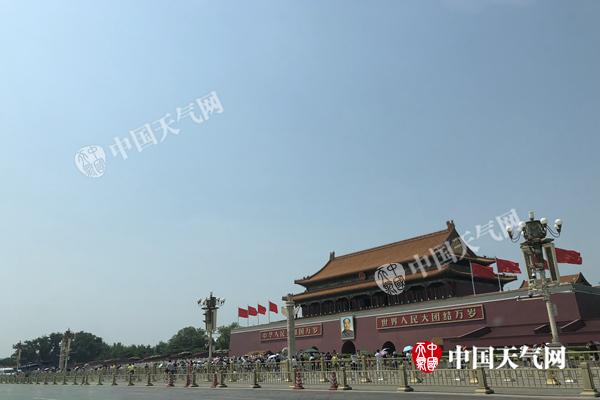
It is difficult to stop the "oven" mode in North China. The local temperature is 40℃, and it rains frequently in South China.

  CCTV News:According to the website of China Weather Network, it is predicted that there will be moderate to heavy rain in Jiangnan and South China tomorrow (3-4), and the high temperature will be basically eliminated; At the same time, the north is still unable to escape the high temperature. Today, the heat in North China is slightly reduced, but from tomorrow, the high temperature weather will increase and expand to Huanghuai, and the local temperature will even hit 40 C.

  Northeast bid farewell to high temperature, North China high temperature rises again.

Wechat Picture _20180602155709_ Copy. jpg

  Affected by the ridge of high pressure, the temperature in the northeast has been hot in recent days. Harbin ushered in the first high temperature this year, which is rare in history, while Xing ‘an League in Inner Mongolia and parts of southwest Heilongjiang challenged the high temperature of 40℃, which was unbearable.

  However, with the arrival of cold air, today, the northeast will be completely freed from the high temperature roasting. It is expected that there will be obvious temperature drop in the central and eastern Inner Mongolia, the western part of Northeast China and other places, with the drop generally reaching 8-12℃ and the local temperature above 15℃. Under the influence of cold vortex, this coolness will also run through next week.

  For North China, which is also scorched by high temperature, it is not so easy to get rid of the high temperature with the help of cold air. Although the highest temperature today has been suppressed to below 35℃, the high temperature will "re-ignite" and gradually increase from tomorrow, and then it will sweep the Huanghuai area. It is estimated that there will be high temperature of 35-38℃ and local temperature of 40℃ in North China and northern Huanghuai on May 7.

  Meteorologists reminded that looking forward to the coming week, high temperature will be the dominant weather stage in the North China Plain and its surrounding areas. Affected by the high temperature weather in partly cloudy, the solar radiation is strong during the day, and there will be ozone pollution from noon to afternoon, so sensitive people should try their best to reduce going out; This hot weather will continue into the college entrance examination, and candidates should prepare for the hot weather during the examination in advance.

  Rainwater in South China frequently causes local or heavy rain.

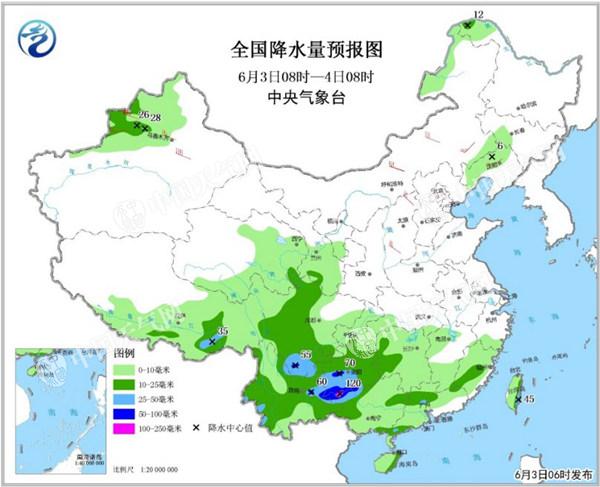
  The past May should be a painful memory for South China, where the frequent rainfall was replaced by the unusually hot and muggy weather. However, from June 1st, with the rainfall gradually becoming the leading role, the high temperature gradually declined. Monitoring shows that there were heavy rains in central and western Guangdong, central and southern Guangxi, eastern Yunnan and southwestern Fujian yesterday, and heavy rains (120-210 mm) in Baise, Yulin and Wenshan, Yunnan, and the maximum hourly precipitation in these areas was 50-97 mm.

  During the day today, the rain in South China will rest temporarily, but from today night to the 5th, there will be a precipitation weather process from west to east in the eastern part of southwest China, south of the Yangtze River and South China, with moderate to heavy rainfall, local heavy rain or heavy rain.

  In addition, during the day to night on the 3rd, there were scattered heavy rains or rainstorms in parts of South China, southern Guizhou, Yunnan and other places, accompanied by strong convective weather such as short-term heavy precipitation and local thunderstorms and strong winds.

  The Central Meteorological Observatory predicts that there will be small to moderate rain in most parts of southwest China, south-central Jiangnan and most parts of southern China today, and there will be heavy rain or rainstorm (100-120 mm) in the eastern and southern parts of southwest China and northern and central South China. These local areas will be accompanied by strong convective weather such as short-term heavy precipitation.

Sevp _ NMC _ webu _ SFER _ EME _ AGLB _ LNO _ P9 _ 20180603080000000 _ XML _ 3 _ copy. jpg

  Tomorrow, the rain will continue to push eastward. It is expected that there will be moderate to heavy rain and local heavy rain in most parts of Yunnan, southeastern Guizhou, northwestern Guangxi, most parts of the south of the Yangtze River, southern coastal areas of Guangdong, Hainan and other places, and these local areas will be accompanied by strong convective weather such as short-term heavy precipitation.

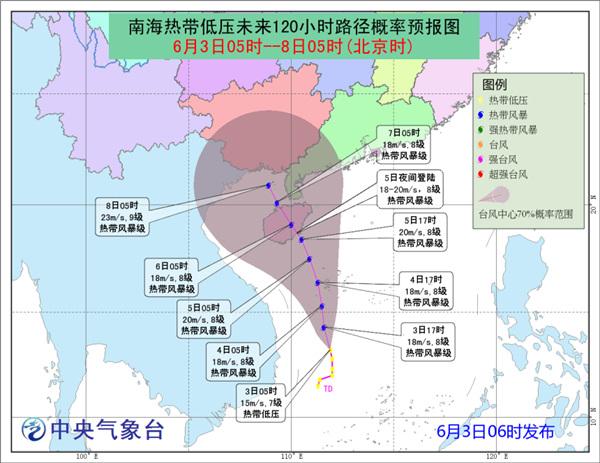
  In addition, the tropical disturbance in the South China Sea was intensified into a tropical depression yesterday, and it is expected to develop into the fourth typhoon (tropical storm level) this year from day to night, and gradually approach the eastern coast of Hainan Island.

  It may affect Hainan and Guangdong before and after the college entrance examination. There may be some uncertainties about the time and place of typhoon landing, so we need to continue to pay attention.

  Affected by this, from the 3rd to the 5th, there will be 7-9 winds and 10-11 gusts in most parts of the South China Sea, Beibu Gulf and Qiongzhou Strait. From the night of the 4th, there will be heavy rain in Hainan Island and the southern coast of South China, and there will be heavy rain locally.

Sevp _ NMC _ TCBU _ SFER _ EME _ ACWP _ L89 _ P9 _ 2018060220002400 _ XML _ 1 _ copy. jpg

  Meteorologists reminded that this round of precipitation process may be accompanied by strong convective weather such as short-term heavy precipitation, thunderstorms and strong winds. It is necessary to pay attention to the forecast and strengthen prevention. At the same time, precipitation may cause slippery roads and accumulated water on the road, so you need to pay more attention when traveling.

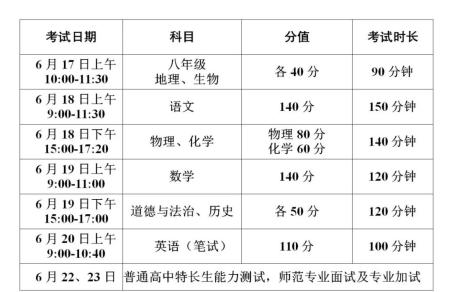
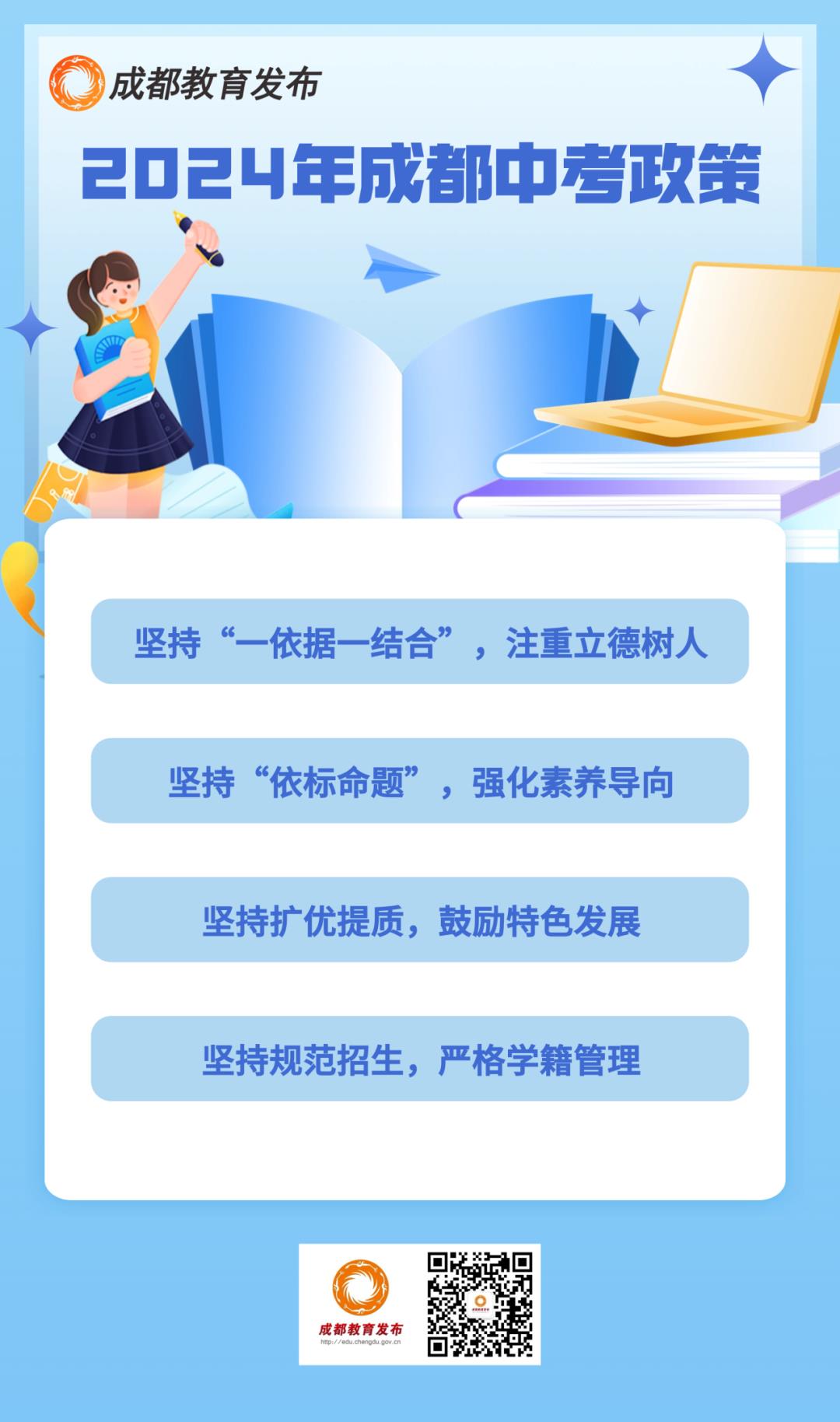
Interpretation of the policies related to the entrance examination in 2024.

First, the examination time and schedule

The eighth grade geography and biology exam is scheduled for June 17th, and the senior high school entrance examination culture exam is scheduled for June 18th-20th. The specific exam schedule is as follows:

The total score of the senior high school entrance examination is 780: 140 for Chinese, 140 for mathematics, 140 for English (including 30 for oral listening), 140 for physics and chemistry, 100 for morality and rule of law and history, 80 for geography and biology, and 40 for physical education.

The results of the senior high school entrance examination are expected to be announced on July 3, and the scores and total scores of candidates in each subject are accurate to 0.5 points. Admission will be made in batches from July 4, and the investment lines of each batch and each stage will be announced one after another.

Two, the urban voluntary reporting batch settings and requirements

1. Volunteer to fill in batch settings

The first batch: four-star high schools, ordinary high schools, secondary vocational schools-undergraduate "3+4" training majors, higher vocational schools-undergraduate "5+2" training majors, and normal colleges and universities.

The first small batch: special students from four-star high schools and other schools can fill in one volunteer;

The second small batch: four-star high schools and ordinary high schools that have been approved to enroll students in four-star high schools in batches can fill in three volunteers, and Volunteer A is also the volunteer of the candidates;

The third small batch: "3+4" sectional training major for secondary vocational colleges and "5+2" sectional training major for higher vocational colleges and universities, and three parallel volunteer can be reported;

The 4th small batch: Normal majors in normal universities can fill in 4 parallel volunteer.

The second batch: other ordinary high schools, comprehensive high school classes, vocational college entrance examination classes in secondary vocational schools and high-skilled talents classes.

The first small batch: other ordinary high school special students can fill in one volunteer;

The second small batch: other ordinary high schools, comprehensive high school classes, vocational education college entrance examination classes and high-skilled talents classes in secondary vocational schools can fill in 6 parallel volunteer.

The third batch: "3+3" training for five-year higher vocational schools and secondary vocational schools-higher vocational schools.

The first small batch: five-year technician classes in higher vocational and technical schools, which can fill in five "school professional groups" parallel volunteer;

The second small batch: "3+3" training for professional and technical school senior workers in secondary vocational-higher vocational schools, and five "school professional groups" parallel volunteer can be filled in;

The third small batch: intermediate workers in secondary specialized schools and technical schools, who can fill in five "school professional groups" parallel volunteer.

See the volunteer sample table for the volunteer settings of each batch.

2. Volunteer reporting time and requirements

Candidates’ volunteering is divided into two stages:

In the first stage, the first batch and the second batch of enrollment school volunteers are reported. The reporting time is from 9: 00 am on June 6 to 12: 00 noon on June 12. Candidates print the volunteer information confirmation form at the registration school and sign it to confirm their volunteers.

In the second stage, fill in the third batch of enrollment school volunteers, and fill in the volunteers for candidates who have not been admitted. The filling time is from July 12 th to 13 th. After the candidates fill in and submit online with the "password card", the volunteers will take effect, and no signature confirmation will be made. Candidates who fill in the first batch of volunteers in this batch but are not admitted can fill in the first batch of volunteers online on July 17; Candidates who fill in the second batch of volunteers in this batch but are not admitted can fill in the second batch of volunteers online on July 21; Candidates who fill in the third batch of volunteers in this batch but have not been admitted can go to secondary vocational schools and technical schools with surplus plans to fill in and solicit volunteers on the spot from July 26th to July 30th. Please refer to the candidate’s "password card" for the specific reporting time.

Candidates are required to fill in their volunteers online with a "password card" within the specified time. Candidates and guardians should take good care of the candidates’ password cards, and may not provide anyone with the passwords of the password cards. The candidates themselves and their guardians shall bear the consequences caused by the loss of dynamic password cards or the disclosure of encrypted passwords.

All schools should ensure the autonomy of candidates to fill in their volunteers. No school or individual may interfere with candidates’ self-filling, and may not force candidates to apply for designated schools against their wishes. Due to external interference, candidates and their guardians can submit a written application to the Municipal Education Examinations Institute with their ID cards or household registration books before the deadline for volunteering. After verification, they can fill in and confirm their volunteers in the Municipal Education Examinations Institute. At the same time, candidates should also carefully choose and fill in their volunteers. Candidates who meet the admission requirements of the school after filing and have been admitted are not allowed to ask for withdrawal and are not allowed to be admitted to other schools.

Third, related questions and answers

1. How to determine the proportion of the pilot program?

The index student plan of ordinary high schools in urban areas accounts for 70% of the total enrollment plan of our school, and the special student plan and unified enrollment plan account for 30%. After the admission of special students, the remaining special students’ plans will be converted into unified enrollment plans. For the candidates assigned to the index, 45 points will be added when investing in the volunteer school of the index students.

2. How to file and enroll ordinary senior high schools in urban areas?

(1) The admission of four-star high schools in the first batch and the second small batch of enrollment schools is divided into three steps:

The first step is to enroll 50% of the unified enrollment plan of each "ordinary high school with an indicator student plan" (referred to as "A volunteer unified enrollment") from all candidates who voluntarily apply for the exam in A according to the candidates’ scores from high to low, and determine the "A volunteer filing line" of "ordinary high school with an indicator student plan".

The second step is to determine the list of candidates who enjoy the treatment of indicator students in each school from high score to low score according to the number of indicator students’ plans allocated by each junior high school under the "A Volunteer Investment Line", and add 45 points to the scores of these candidates as the scores when enrolling indicator students’ volunteers (B and C volunteers are not added).

Step 3: All the candidates who fill in the volunteers of this batch of schools and are not admitted will be enrolled according to the principle of "giving priority to scores and following volunteers" in parallel volunteer, and will be enrolled according to the enrollment plan of 1: 1, so as to generate the parallel volunteer enrollment line of each school.

Candidates with an aesthetic education evaluation score of C or above, qualified physical and chemical experiments and a comprehensive quality evaluation of B or above can be admitted to a four-star high school.

(2) The admission method of other ordinary high schools is to file and enroll students at the minimum admission control line of ordinary high schools according to the principle of "giving priority to scores and following volunteers" in parallel volunteer according to the enrollment plan of 1: 1. Candidates who pass the physical and chemical experiments can be admitted to ordinary high schools with three stars or above.

3. How to recruit students for "3+4" training majors in secondary vocational schools, "5+2" training majors in higher vocational schools and normal colleges?

Secondary vocational-undergraduate "3+4", higher vocational-undergraduate "5+2" and teachers’ majors in normal colleges are ranked as "majors". Candidates with the same scores are ranked according to the total scores of Chinese, Mathematics and English (including oral listening), Chinese scores and mathematics scores from high to low. Candidates who apply for teachers’ majors in normal universities must participate in the interview and professional additional examination organized by the enrollment school.

4. What is the "school professional group"? How to volunteer to fill in, file and enroll in the "school professional group" as a unit?

"School Professional Groups" are a number of "professional groups" independently set up by the enrollment school according to the school’s professional admission requirements and professional training direction. A school can set up one or more "professional groups", and each "professional group" can contain a different number of majors.

When volunteering, candidates can fill in multiple "school professional groups" (that is, candidates can fill in multiple professional groups in the same school or different professional groups in different schools). Each professional group can fill in 2 professional volunteers and whether they obey other majors in the professional group.

At the time of admission, the Municipal Education Examinations Institute takes the "school professional group" as the unit to file, and after the file is filed, the score line of each "school professional group" is generated, and the enrollment school determines the student’s admission major within the professional group. When the students’ professional volunteers cannot be satisfied, if the candidates fill in "obeying other majors in the professional group", the professional adjustment will be carried out in the professional group.

This year, our city will continue to use the unified admission platform of the whole city and strictly implement the relevant provisions of the state, province and city on education examination and enrollment management. Candidates who meet the admission requirements of the school after filing and have been admitted are not allowed to ask for withdrawal and are not allowed to be admitted to other schools. Schools that have completed the plan in the centralized admission stage will no longer arrange supplementary admission.

Original title: "Interpretation of policies related to enrollment in the 2024 senior high school entrance examination"

Read the original text

Heavy! Chengdu senior high school entrance examination policy announced in 2024

Recently, the Chengdu Recruitment Committee and the Chengdu Education Bureau issued the "Implementation Regulations on the Unified Entrance Examination for Senior High Schools in Chengdu in 2024", clearly proposing to deepen the four persistences and further improve the entrance examination enrollment mode for senior high schools based on students’ academic level test scores and comprehensive quality evaluation.

Is there any change in the policy of senior high school entrance examination in Chengdu this year?

The detailed interpretation is coming.

Adhere to the "one basis and one combination" and pay attention to moral education.

According to the requirements of the Ministry of Education and the Sichuan Provincial Department of Education on deepening the reform of the senior high school entrance examination system, Chengdu has further improved the enrollment mode of senior high school examinations based on students’ academic performance and comprehensive quality evaluation.

Comprehensive quality evaluation is the observation, recording and analysis of students’ all-round development, and it is an important means to cultivate students’ good conduct and develop their individuality. In the admission of senior high school entrance examination, if there is a positive list of award-winning records such as "Good Teenager in the New Era", "Labor Medal" and "Labor Expert" at or above the municipal level, under the same conditions, it will be given priority to be recommended as an indicator to the school students or to be given priority in the admission; Candidates who cheat in the exam, school bullying or fail to complete the realistic record of comprehensive quality evaluation as required during their junior high school stay shall not be recommended as indicators to go to school, and finally file in the admission. Let the comprehensive quality evaluation really play a role in the enrollment of high school students, which is conducive to cracking the score theory, and has positive significance for implementing the fundamental task of educating people and promoting students’ all-round development and healthy growth.

Insist on the proposition of "following the standard" and strengthen the quality orientation

The entrance examination for senior high schools implements the "integration of two examinations", giving consideration to graduation and further studies. The examination proposition follows the comprehensive evaluation concept of "value-oriented, literacy-oriented, ability-oriented, knowledge-based", strictly follows the curriculum standard proposition of compulsory education, does not exceed the curriculum standard and arbitrarily expands the scope of examination content, reduces the content of simple memory and mechanical training, and strengthens the connection with students’ life and social reality. The examination questions of each subject are based on the subject accomplishment, focus on the thinking ability, highlight the open inquiry, pay attention to not only the basic knowledge and skills, but also the thinking process, innovative consciousness and the ability to comprehensively apply the learned knowledge to analyze and solve problems.

Adhere to the expansion and improvement of quality and encourage the development of characteristics.

Co-ordinate the allocation of high school education resources in the city, scientifically compile the enrollment plan of high school schools, and ensure students’ opportunities for further study; Encourage the development of high-quality schools in high schools, and run a number of high schools with humanities, science and technology, foreign languages, art, sports or national defense education to meet the development needs of students with different potentials; Encourage the establishment of a number of comprehensive high schools, deepen the reform of educational methods, promote the integration of general vocational education, provide opportunities for students to voluntarily choose to attend general high schools or secondary vocational education during their first or second year of high school, and alleviate the anxiety of general vocational diversion.

Ordinary high schools with standardized school-running behavior, good foundation and school-running conditions can recruit a certain number of students with academic expertise and innovation potential in the city or "5+2" area after approval by the Municipal Education Bureau, and carry out early training of top-notch innovative talents.

Adhere to standardized enrollment and strict student status management.

? ? The senior high school entrance examination implements "six unifications"

That is, unified examination subjects and time, unified examination questions, unified reference answers and grading references, unified examination methods, unified organization of marking, and unified publication of results.

? ? Standardize enrollment behavior

Continue to carry out the city’s high school enrollment centralized consultation activities, standardize the school counseling behavior; Further optimize the "auxiliary system for volunteering in the senior high school entrance examination" to provide reference suggestions for candidates to fill in their volunteers free of charge; Senior high schools may not enroll students across regions without the approval of Chengdu Education Bureau, and may not enroll students across cities (states) without the approval of Sichuan Education Department; Set up a QR code for complaints and reports, and smooth the channels for supervision and complaints; Seriously investigate and deal with illegal propaganda and false propaganda, and create a good public opinion atmosphere.

? ? Standardize student registration

The enrollment of ordinary high schools in the city is carried out through a unified online admission platform. The "5+2" area is strictly compared with the school registration database by the Municipal Education Bureau and the Municipal Education Examinations Institute. Students who are not admitted according to the policy may not register for the school; Other enrollment areas are based on the admission results of the local education administrative departments, and the registration management of student status is strict.

Chengdu Senior High School Entrance Examination Policy in 2024

Issues of concern to candidates and parents

Q/1

What is the total score of the entrance examination in our city, and how to form it?

The entrance examination results are presented in the form of scores, with a full score of 710 points, specifically: the sum of the scores of volumes A and B in Chinese, Mathematics and English, with a full score of 150 points each; Physics is: Grade A × 50%+Grade B, out of 70; Chemistry is: the grade of a volume ×50%, with a full score of 50 points; Physical examination results, out of 60 points; At the same time, the graduation grades of morality and rule of law, history, biology and geography are included in the entrance examination results according to 20 points for A, 16 points for B, 12 points for C, 8 points for D and 0 points for lack of exams, with full marks of 20 points each. When physics and chemistry are included in the entrance examination results, they all keep one decimal place, and the total score is rounded off after synthesis, and no decimal places are kept.

Q/2

Which candidates can get extra points for the senior high school entrance examination this year?

There are five categories of candidates who are eligible for extra points when they are admitted to ordinary high schools and vocational general education classes in the city:

? ? The preferential treatment measures for military children shall be implemented according to relevant policies, and the Political Work Office of Chengdu Garrison shall be responsible for the qualification examination.

? ? The preferential treatment measures for children of police officers who are heroic and disabled in the line of duty shall be implemented in accordance with relevant policies, and the political department of Chengdu Public Security Bureau shall be responsible for the qualification examination.

? ? The preferential treatment measures for children of fire rescue workers shall be implemented according to relevant policies, and the Chengdu Emergency Management Bureau shall be responsible for the qualification examination.

? ? Returned overseas Chinese, children of returned overseas Chinese and children of overseas Chinese, add 5 points, and the United Front Work Department of Chengdu Municipal Committee shall be responsible for the qualification examination.

? ? Candidates from Taiwan Province Province, add 5 points, and the United Front Work Department of Chengdu Municipal Committee is responsible for the qualification examination.

All units (departments) shall be responsible for the publicity and explanation of the above bonus points policy, the materials that candidates and parents should provide, and the application and review process. The review should be completed before the end of May, and the official list (including candidates’ registration number, ID number, care category and other information) should be sent to Chengdu Education Bureau by official letter before May 31. After the audit of Chengdu Education Bureau, the Municipal Education Examinations Institute will publicize it as required. If there is any objection to the contents of the publicity, it should be reported to the qualification examination unit (department) within 5 working days from the date of publicity, and it will not be accepted after the deadline. The qualification examination unit (department) shall feedback the review results within 3 working days, and at the same time, inform the Municipal Education Bureau of the information that needs to be corrected, which will be published and implemented by the Municipal Education Examinations Institute.

? ? In the process of admission, if candidates meet a number of bonus policies, they will only enjoy a bonus with the highest score.

? ? Five-year higher vocational (including normal) and secondary vocational schools’ bonus points policy and qualification examination shall be implemented according to the relevant provisions of the Provincial Recruitment Committee.

Q/3

Has there been any adjustment to the policy of enrolling students in the senior high school entrance examination this year, and when should we start recommending the indicators to the students?

In 2024, the work of the indicators of ordinary high school students will be carried out according to the Notice on Seriously Doing a Good Job of the Indicators of Ordinary High School Students in Chengdu (Cheng Zhaowei [2022] No.3), and the start-up time of the indicators of all districts (cities) and counties and all schools (including public and private) will not be earlier than May 4, 2024. In the "11+2" area (referring to 13 districts including Sichuan Tianfu New District, Chengdu High-tech Zone, Jinjiang District, Qingyang District, jinniu district, Wuhou District, chenghua district District, Longquanyi District, qingbaijiang district District, Xindu District, Wenjiang District, Shuangliu District and Pidu District, the same below), all kinds of indicators are declared and reviewed by students online. The specific work schedule is as follows. All kinds of indicators that have not been declared and reviewed online will be invalid when they arrive at school; It is invalid for high school to recruit students who have been admitted to other schools without authorization.

Q/4

When will the enrollment of ordinary senior high school students and various project classes begin this year?

The enrollment plan, enrollment scope, application conditions and related policies of the "5+2" regional ordinary high school art and sports special students will be announced to the public in early June; The enrollment policy for ordinary senior high school students with artistic and sports specialties in other enrollment areas shall be determined by the local education administrative department. The name, enrollment plan and enrollment scope of the project class will be announced to the public when the enrollment plan of ordinary high schools is announced (in early June); The enrollment brochures of each project class are determined by each high school and announced to the public.

The voluntary reporting of art and sports specialty students and project classes will be carried out after the senior high school entrance examination and before the results are notified. If candidates are interested in arts and sports specialties or project classes in some senior high schools, they can consult the schools for details.

Q/5

When is the time to fill in the volunteers for this year’s senior high school entrance examination, and how is the number of volunteers for further studies that students can fill in?

All enrollment areas in the city implement online volunteering. Except for art and sports specialty students and project classes, voluntary reporting will be carried out after the senior high school entrance examination and before the results are notified, and the rest will be reported after the results are notified (around June 28).

The number of volunteers in the second and third batches in the "5+2" area is 7. Among them, the first, third, fifth and seventh volunteers in the second batch can fill in the unified recruitment and private high school volunteers, and the second, fourth and sixth volunteers can fill in the adjustment and private high school volunteers; The third batch of seven volunteers can be submitted simultaneously in unified recruitment, adjustment, private high school, general vocational integration and secondary vocational school volunteers, and candidates can choose by themselves when filling in their volunteers.

The number of volunteers and admission batches in other enrollment areas shall be determined by the local education administrative department.

Q/6

When will the scores be published in the "5+2" area and admitted in several batches?

It is expected that when the results of the senior high school entrance examination are notified on June 28th, the "5+2" regional provincial-level demonstration ordinary high schools will be delineated and announced, including the voluntary guidance line (commonly known as the provincial heavy line), the minimum file delivery line of ordinary high schools (commonly known as the general high school line) and the admission guidance line of vocational and general integration classes.

"5+2" regional high school unified admission is divided into three batches according to the order. Among them:

? ? The first batch: divided into 7 categories according to the order, followed by the first category "children of high-level talents and children of qualified frontline medical staff in COVID-19 epidemic prevention and control"; Category 2 "Youth Aviation Experimental Class"; Category 3: "Students with indicators arriving at school"; Category 4 "Campus Football Class, Volleyball Reserve Team and Basketball Reserve Team"; Category 5 "Artistic and Sports Special Students"; Category 6 "Enrollment Plan for Non-‘5+2’ Regions in Chengdu"; The seventh kind of "project classes" includes public and private ordinary high school project classes. In this batch of admission, the candidates who are admitted in the previous category will not participate in the admission in the future category.

? ? The second batch: provincial demonstration ordinary high schools, approved public and private ordinary high schools.

? ? The third batch: municipal demonstration ordinary high schools, ordinary high schools, private ordinary high schools, vocational and general integration classes, and secondary vocational schools (enrollment for the whole city). This batch of schools can also report.

? ? Five-year higher vocational education (including teachers’ colleges) plans to recruit students for the whole city, with individual volunteers and filling in at the same time, and admission is organized by the Provincial Education Examinations Institute.

Q/7

How to organize and implement the city’s entrance examination this year?

The "5+2" regional ordinary high school enrollment is organized and implemented by Chengdu Education Examinations Institute (including the enrollment of ordinary high school students in Longquanyi District, qingbaijiang district, Xindu District, Wenjiang District, Shuangliu District and Pidu District). The admission of ordinary high schools in other enrollment areas is organized and implemented by the local education administrative department.

Illustration of the Implementation Regulations of Chengdu Senior High School Entrance Examination in 2024

Chengdu ordinary high school in 2024

Illustration of the policy of indicators to school students

Dodge Tyrannosaurus Rex 6.2T latest offer 820,000

  The 2023 Tyrannosaurus Ramus in Tianjin Port is now sold in the sixth country, and it is licensed nationwide. The 23 Dodge Ram Tyrannosaurus Rex uses a supercharged 6.2-liter HEMI? HELLCAT V8 engine with a maximum horsepower of 712 horsepower and a maximum torque of 881 Nm. 1500 TRX has become the fastest and most powerful mass-produced half-ton pickup truck in the world. In terms of torque, TRX provides a new performance level with a speed of 0 to 100 km/h in 4.9 seconds and a top speed of 190 km/h.

  For more model details, please call: 18920481155 Manager Wang (with WeChat).

  23 U.S. Tyrannosaurus Rex Basic Edition Black/Black/Red Skyless Black/Red Double Interior Plastic Door Handle LCD Anti-theft Bolt

  The exterior design of the Dodge Ram Tyrannosaurus Rex has a strong sense of impact. Compared with the well-behaved family design, the front of the Dodge Ram Tyrannosaurus Rex is undoubtedly a little more aggressive to the road. The eyes do not reveal a trace of lively charm, and the only thing that is displayed is fierceness. The front bumper is an iron front bumper with a hook, which exudes a metallic atmosphere and is calm and atmospheric. As the best-selling model, it has a very aggressive front face.

  For more model details, please call: 18920481155 Manager Wang (with WeChat).

  Dodge Ram Tyrannosaurus Rex has completely got rid of the rough feeling of the United States. The edges and seams are carefully handled. The leather seats are independent and equipped with comfortable functions such as heating and massage. Each seat is equipped with a control handle independently, and each function is controlled by the rider himself. All seats of Dodge Ram pickup truck are wrapped in leather, and the front row is also equipped with very practical sports seats.

  The design of the 2023 Dodge Ram Tyrannosaurus Rex center console is simple and hard, which conforms to the temperament of the ram. The bottom of the dashboard has patterns, which further highlights the elegance of this car. The soft instrument panel design is very comfortable to the touch, and there is nothing stiff.

  For more model details, please call: 18920481155 Manager Wang (with WeChat).

  The chassis of 23 Dodge Tyrannosaurus Rex has also been greatly upgraded. The chassis is made of a large number of high-strength steel to improve the rigidity of the frame. At the same time, the suspension system is also equipped with an adaptive shock absorber from Bilstein, which can reduce the vibration during high-speed desert driving and off-road, and improve driving performance and durability.

  For more model details, please call: 18920481155 Manager Wang (with WeChat).

  The interior of the 23 Dodge Tyrannosaurus Rex is simple and generous, but this will not affect its luxurious texture. The rich configuration will make you admire it. At the same time, as the flagship model of the Dodge family, the new car is also equipped with a 12-inch vertical central control screen. In addition to supporting common functions such as Bluetooth, navigation and car Wi-Fi, it also supports Apple CarPlay and Android Auto phones.

  For more model details, please call: 18920481155 Manager Wang (with WeChat).

  In addition to powerful power, the performance version of the 23 Dodge Ram Tyrannosaurus Rex is also first-class in cross-country performance. The clearance between the vehicle and the floor is 28cm, the contact angle is 30.2, the departure angle is 23.5, the passing angle is 21.9, and the wading height is 81.28cm, which can correspond to most sections. In addition, the new car is equipped with an adaptive shock absorber from Bilstein, and the stroke of the front and rear wheels reaches 33/.

  China Automobile Shunhe International Trading Co., Ltd., a company that mainly imports high-end cars of luxury car brands such as Mercedes-Benz, BMW, Toyota, Land Rover, Rolls-Royce, Bentley and Lexus in parallel, provides follow-up services such as insurance, installment, licensing, modification and car delivery.

  Overseas direct-selling first-hand car source All the models sold by our company can be phased in the whole country, and it takes only one day to buy a car by stages. Car purchase can be flexibly operated with convenient conditions such as full ticket tax deduction, decorative ticket, advance payment and departure. More car information configuration quotes and promotions are posted on WeChat, welcome to add!

  (National installment can be made, with a down payment of 10% and a loan of 3-6 years, with simple procedures and quick loan)

  Company address. Tianjin Port Bonded Area Pacific International Automobile B3-B5-B7-B9

  Tel: 18920481155 Manager Wang can add WeChat.

  Disclaimer: The above car purchase preferential information is provided by the comprehensive dealers of this website, and the price fluctuates greatly due to market factors, which is only for car purchase reference; The distributor is responsible for its authenticity, accuracy and legality, and this website does not provide any guarantee or assume any legal responsibility.

Announcement of Nanning Municipal People’s Government on the rectification of problems found in the special audit investigation of soil pollution prevention and control in Nanning

According to the provisions of Article 27 of the Audit Law of People’s Republic of China (PRC), the Audit Office of the Autonomous Region has conducted a special audit investigation on the prevention and control of soil pollution in 14 districts and cities in the whole region since April 18, 2021. In view of the relevant problems pointed out by the audit of the autonomous region, the city attached great importance to it, held a special rectification arrangement meeting and promotion meeting, formulated a rectification plan, and organized and deployed relevant units to promote the rectification of existing problems strictly and realistically. The rectification situation is hereby announced as follows:
I. Rectification of problems found in audit investigation

(a) the rectification of the lack of local financial funds in supporting the research on the prevention and control of soil pollution

The city actively takes measures to include the research and demonstration of environmental protection technologies such as soil pollution prevention and control in the annual "Guidelines for the Application of Science and Technology Projects in Nanning", and encourages relevant enterprises to actively apply for research projects; Formulate the "Notice on the Application for the Construction Science and Technology Plan Project of Nanning National Agricultural Science and Technology Park in Guangxi from 2021 to 2023" (Nanketong [2021] No.54), and clearly support the technical research on soil remediation and governance and soil improvement in planting areas. In addition, we will support post-application subsidy projects for the transfer and transformation of scientific and technological achievements in soil pollution prevention and control, and support enterprises to carry out research on soil pollution prevention and control through post-subsidy methods such as project subsidies, awards for research and development funds, and scientific and technological innovation vouchers.

(two) the rectification of illegal occupation of basic farmland by farms.

In view of the problem of illegal occupation of basic farmland, the city actively promotes rectification. First, for those who meet the requirements for facility agricultural land, the permanent basic farmland will be replenished and the facility agricultural land will be filed; Second, for those who do not meet the requirements for filing agricultural land with facilities, relevant facilities shall be dismantled and reclaimed and re-cultivated according to law; Third, according to the Letter of the Department of Cultivated Land Protection and Supervision of the Ministry of Natural Resources on Promoting the Verification and Rectification of Permanent Basic Farmland and the Boundary of Urban Development (Natural Resources Spatial Planning Letter [2021] No.121), the relevant requirements of "transferring non-cultivated land and unstable cultivated land in the current permanent basic farmland from the facts" were put forward, and the permanent basic farmland was transferred in this verification, rectification and replenishment work; Fourth, crack down on illegal occupation or destruction of cultivated land and destruction of farmland infrastructure in accordance with the law.

(three) the rectification of domestic waste landfill overload operation

The first is to ensure the normal operation of the active landfill. Six domestic waste sanitary landfills in Nanning have adopted measures such as increasing landfill equipment and workers to standardize the sanitary landfill operation process of domestic waste and ensure the normal operation of landfills. The second is to speed up the construction of garbage disposal facilities and reduce the load of existing garbage landfills. Promote the construction of projects such as Liujing Domestic Waste Incineration Power Plant in Hengzhou City and Binyang Domestic Waste Incineration Power Plant, improve the garbage disposal capacity and reduce the landfill load. Third, efforts should be made to improve the total treatment capacity of leachate treatment facilities in Pingli vein industrial park-domestic waste sanitary landfill. At present, the leachate treatment capacity of Pingli landfill is about 700 m/d, which basically meets the actual demand. At the same time, the concentrated solution treatment scheme is being comprehensively selected, and it is planned to be further approved and implemented in the near future. The fourth is to fully promote the construction of the domestic waste incineration power plant project in Shuangding Circular Economy Industrial Park. It is expected that after the commissioning of Shuangding Incineration Plant before the end of this year, the city will realize zero landfill of primary domestic waste.

(four) the rectification of the problem that the mechanism of pesticide packaging waste recycling and treatment is not perfect and the work progress is slow.

1. Establish and improve the relevant systems of pesticide packaging waste recycling.

First, the arrangement meeting and promotion meeting of pesticide management ledger and pesticide packaging waste recycling in the city were organized, Guangxi pesticide invoicing system was promoted in all pesticide management stores in the city, training courses on pesticide management ledger system and pesticide packaging waste recycling were held, relevant laws and regulations were publicized, and the construction of invoicing system was improved. The second is to preliminarily study and formulate the "Work Plan for Comprehensive Promotion of Recycling and Centralized Disposal of Abandoned Agricultural Packaging Materials in Nanning in 2022" to consolidate and promote the pilot results. The third is to organize enterprises to declare the identification of Guangxi pesticide packaging waste resource utilization enterprises, laying the foundation for the construction of pesticide packaging waste disposal system.

2. Rectification of the problem of unclear total amount of pesticide packaging waste.

First, give full play to the role of Guangxi pesticide digital supervision platform, organize the agricultural and rural departments of counties (cities, districts) to strengthen publicity and promotion, publicize relevant laws and regulations by holding a meeting of the heads of pesticide stores, urge the use of Guangxi pesticide digital supervision platform to fill in the data information of pesticide invoicing, and gradually establish a supervision system with clear base and clear destination. Second, according to the deployment requirements of the Agriculture and Rural Affairs Department of the autonomous region, the survey of pesticide packaging waste in the first three quarters of 2021 was carried out. Third, on the basis of investigation, combined with the actual situation of our city, the Work Plan for Comprehensive Promotion of Recycling and Centralized Disposal of Abandoned Agricultural Packaging in Nanning in 2022 was initially formulated. On the basis of consolidating the pilot results from 2018 to 2021, it is planned to comprehensively promote the recycling and centralized disposal of abandoned agricultural packaging in the city in 2022.

3. Rectification of the problem of inadequate environmental supervision of pesticide chemical plants.

The first is to urge the on-site inspection to find problems and establish reforms. After the audit pointed out the existing problems, the city immediately urged enterprises to establish reforms, and at the same time, made inferences about other things, strengthened daily supervision, and prevented environmental pollution risks. At present, relevant problems have been rectified. The second is to strengthen daily supervision and prevent environmental pollution risks. Combined with the work of "double random and one open" spot check, supervision after discharge permit, and regular investigation of environmental safety hazards, we will continue to strengthen the daily environmental supervision of enterprises in pesticide and chemical industry, urge enterprises to strictly implement the requirements of environmental impact assessment, strengthen the operation management of pollution prevention facilities and the investigation and rectification of pollution hazards, and make every effort to ensure environmental safety.

(five) the management and disposal of agricultural film recycling is not standardized enough, and the rectification of the problem of insufficient work support.

1. Establish and improve the relevant systems of agricultural film.

In order to implement the relevant requirements of the Measures for the Administration of Agricultural Films, and gradually establish and improve the relevant management system of agricultural films, the Implementation Plan for the Pollution Control of Agricultural Films in Nanning in 2021 (No.52 [2021] of Nannong Bureau) was formulated and issued, which clarified the objectives and tasks, put forward work measures, and further improved the construction of the management system for the recycling and disposal of agricultural films in the city. In addition, the Work Plan for Monitoring and Investigation of Agricultural Film Recycling in Nanning City in 2021 (No.53 [2021] issued by Nannong Bureau) was formulated to implement the requirements of agricultural film monitoring and investigation system, providing scientific basis and technical support for strengthening supervision, prevention and control of agricultural film residual pollution and comprehensive decision-making.

2. The lack of personnel and funds, and the rectification of unfinished basic work.

After the audit pointed out, the city has formulated and issued the Work Plan for Monitoring and Investigation of Agricultural Film Recycling in Nanning City in 2021 (No.53 [2021] issued by Nannong Bureau), and in 2021, it has implemented special funds of 310,000 yuan for establishing 31 agricultural film monitoring points, and distributed subsidies for agricultural film monitoring points to counties (cities, districts) to carry out related work. At present, it has applied for a special fund budget of 310,000 yuan for agricultural film monitoring points in 2022. The next step will be to further strengthen the construction of personnel, increase financial support and strengthen the supervision and management of agricultural films.

(six) the rectification of the problem of inadequate supervision and management of the recycling and disposal of waste electrical and electronic products.

After the audit pointed out, the city immediately carried out on-site inspection of the private dismantling factory, and ordered the parties concerned to properly dispose of the recovered waste electrical appliances and restore the recycling point to its original state, and could not carry out related activities without obtaining relevant licenses. At present, the dismantling point has properly disposed of the recovered waste electrical appliances and restored the original state of the recycling point. In addition, strengthen industry supervision, carry out regular supervision and inspection, strengthen supervision and management, standardize the recycling activities of waste electrical and electronic products, and prevent environmental pollution risks.

(seven) the rectification of the problems of nonstandard storage management and incomplete system measures of hazardous waste in social waste mineral oil, waste lead storage battery and other production units.

The first is to urge the on-site inspection to find problems and establish reforms. After the audit pointed out, the relevant auto repair factories were immediately ordered to set up reforms, and the daily supervision was strengthened. At present, the relevant garage has standardized the management of storage and transportation of waste mineral oil and waste lead batteries as required, improved the management ledger and strengthened daily management, and the related problems have been rectified. The second is to strengthen publicity and training to enhance the awareness of standardized management of hazardous waste in enterprises. On October 20, 2021, a training course on standardized environmental management of hazardous wastes in Nanning in 2021 was held, and relevant units and enterprises were organized to participate in the training. By inviting experts from the Department of Ecology and Environment of the autonomous region to give lectures and distributing study manuals, the publicity of the Law on the Prevention and Control of Environmental Pollution by Solid Wastes was increased, and relevant enterprises were urged to implement the requirements of standardized management of hazardous wastes.

(eight) rectification of industrial solid waste long-term storage, there are environmental risks.

First, in view of the problem of long-term storage of hazardous wastes pointed out by the audit, on the one hand, enterprises are urged to store hazardous wastes in strict accordance with the requirements of standardized management of hazardous wastes, strengthen daily supervision, and guard against potential environmental risks; on the other hand, they are actively connected with the Department of Ecology and Environment of the autonomous region, actively looking for disposal paths, striving to complete the disposal as soon as possible and completely eliminate potential environmental risks. The second is to strengthen publicity and training to enhance the awareness of standardized management of hazardous waste in enterprises. Hold a training course on standardized environmental management of hazardous wastes in Nanning in 2021, and urge and guide relevant enterprises to implement standardized management requirements of hazardous wastes through publicity and training. The third is to carry out the standardized environmental management assessment of hazardous waste in 2021 as a starting point, conduct spot checks and assessments on the standardized environmental management of hazardous waste in hazardous waste generating units and business units in the city, guide enterprises to implement the standardized management of hazardous waste, and investigate and deal with environmental violations.

(nine) to supervise and implement the rectification of the tailings dam preventive measures are not in place and there are hidden dangers of environmental pollution.

The first is to urge the on-site inspection to find problems and establish reforms. After the audit pointed out, the company immediately urged enterprises to set up reforms, draw inferences from others, and strengthen supervision. At present, relevant problems have been rectified. The second is to organize a comprehensive investigation of tailings ponds in the city. At the end of July, 2021, he accompanied the Department of Ecology and Environment of the Autonomous Region to conduct pollution prevention and environmental risk inspection and research on the registered tailings ponds in the city, and urged enterprises to strictly implement pollution prevention measures to eliminate hidden dangers of environmental pollution. In September, 2021, the safety inspection and investigation of tailings ponds after flood was organized, and the safety inspection and investigation of tailings ponds currently registered were carried out. From the inspection results, the safety status of tailings ponds in Nanning City was controllable.

(ten) the rectification of the balance of financial funds for soil pollution prevention and control.

In view of the balance of special funds for soil pollution prevention and control, urge the relevant project implementation units to speed up the use and disbursement of the balance funds. The balance of special funds at the city level shall be paid before the end of December 2021 in accordance with the contract; The remaining central funds are intended to be used for the construction of the soil pollution prevention and control management platform project, and the project proposal is currently being formulated.

Second, the next step

In the next step, the city will strictly implement the audit rectification opinions, take "eating with confidence and living with peace of mind" as the goal, strictly promote the implementation of the "Rectification Plan for Problems Found in Special Audit Investigation of Soil Pollution Prevention and Control in Nanning", take the problem rectification as the starting point, improve the city’s soil pollution prevention and control system, improve the level of soil pollution prevention and control, enhance the security of soil environment, and promote the continuous improvement of soil environmental quality.

Hereby announce

November 19, 2021

2021 Munich Auto Show: Volkswagen’s new Maitewei Multivan unveiled.

2021 Munich Auto Show: Volkswagen's new Maitewei Multivan unveiled.

  At the 2021 Munich Motor Show, the new Multivan was officially unveiled. The new car no longer shares the Transporter platform with the freight version of Kailuwei, but is based on audi ag’s MQB platform, which will have a more suitable driving experience for passenger cars. In terms of power, there will be 1.5T and 2.0T gasoline power, diesel power will be added next year, and the first plug-in hybrid version will be available.

2021 Munich Auto Show: Volkswagen's new Maitewei Multivan unveiled.

  The new Maitewei Multivan comes standard with LED headlights, and can be upgraded to interactive IQ.LIGHT matrix LED headlights. The full-beam design brings better intelligent corner lighting effect, while avoiding glare hazard to the driver of the other vehicle; The IQ.LIGHT system also runs through an LED horizontal light bar in the front grille as another element of daytime running lights, which is also one of the iconic designs of the new generation of Volkswagen family.

2021 Munich Auto Show: Volkswagen's new Maitewei Multivan unveiled.

  The new Maitewei Multivan continues the classic square box shape, and the double A-pillar design is the biggest difference from previous models, which can effectively reduce the blind spot of vision; Its body size is 4973/1941/1903mm and its wheelbase is 3124 mm. A longer version with a length of 5173mm is also available.

2021 Munich Auto Show: Volkswagen's new Maitewei Multivan unveiled.

  Founder’s tail is a typical MPV shape, and the style of horizontal split taillights is somewhat similar to the current Touran L.

2021 Munich Auto Show: Volkswagen's new Maitewei Multivan unveiled.

  The interior adopts a brand-new design, and uses a wood decorative board and a piano paint panel to enhance the sense of grade, which distinguishes it from the style of the current tool car. Following the concept of popular digitalization, the new Maitewei Multivan is also equipped with a 10.25-inch LCD instrument and a 10-inch central control panel, and uses an electronic lever design similar to that used on Golf 8.

2021 Munich Auto Show: Volkswagen's new Maitewei Multivan unveiled.

  The new Maitewei Multivan has also been upgraded with IQ.DRIVE Travel Assist intelligent driving assistance system, which realizes semi-automatic driving by combining predictive adaptive cruise control and lane assist system, making long-distance travel safer and easier. At the same time, it is also equipped with panoramic image function.

2021 Munich Auto Show: Volkswagen's new Maitewei Multivan unveiled.

  In terms of space, the new Maitewei Multivan provides a 7-seat layout in the form of 2+2+3. The middle row of seats can rotate 180 degrees, and the third row has three independent seats. The standard volume of the trunk is 469 liters, which can be expanded to 1844 liters when the third row is put down (the panoramic glass roof is 1850 liters). The maximum cargo capacity is 3672 liters, and the extended version can be extended to 4053 liters.

  In terms of power, the new Maitewei Multivan will be equipped with 1.5T and 2.0T engines, matching the 7-speed dual-clutch gearbox; A diesel engine will be provided in overseas markets next year. In addition, the new Multivan will also provide a plug-in version for the first time, which consists of a 1.4T engine and an 85kW motor, and the transmission system is a 6-speed dual-clutch gearbox.

The evaluation results of China Insurance Research have reached a record. Has Tank 300 really become a "road tank"?

How to see the gold content of a car company through products? Some people say that it depends on the technical content of the product, and the gold content will naturally not be low if all kinds of intelligent technologies are added.

Such a statement seems to be sophistry.

Have you noticed, from Bosch and Magna to Mobileye and Horizon … There are countless high-tech manufacturers in the world providing intelligent system solutions for vehicles. Many car companies can also support the scientific and technological system of vehicles through procurement schemes.

The gold content of a car company should be in the quality itself. To give a very simple example, the gold content of Volvo brand lies in safety; The gold content of BMW lies in manipulation; The gold content of Lexus lies in the control of details …

In fact, looking at major domestic manufacturers, there are also many brands that can make us shout "something".

Great Wall Motor, for example, takes a similar path to Volvo, and interprets the kindness of this manufacturer with excellent safety.

What does the record-breaking test result mean?

On April 6th, China Insurance Automobile Safety Index (C-IASI) released a new round of vehicle evaluation results. Among them, the tank 300 from Great Wall Motor (parameter picture) can be described as brilliant.

With the achievement of "1A3G", this car has gained the best performance of non-loaded body models in recent years.

In fact, as a hard-core off-road vehicle equipped with a girder structure, it is not difficult to get good results in a 25% offset collision or side collision. After all, it is supported by a girder with a hard bottom.

The difficulty of non-load-bearing body is that the strength of the roof is difficult to optimize.

In terms of structure, the chassis and cage structure of hard-core off-road vehicle belong to two unrelated parts, and the non-load-bearing body has low requirements on the strength of the body structure. This also means that most hard-core off-road vehicles can’t disperse the pressure through the chassis like a load-bearing body when the roof is stressed. The facts also show that the strength of the roof is also the "pain point" of many off-road vehicles.

In the IIHS crash test in the United States, Toyota 4RUNNER, which is also equipped with girders, but has no in-car roll cage, only achieved "poor" results in the evaluation project of body structure due to insufficient roof strength.

However, herdsman JL, which is equipped with a girder and an in-car roll cage, can’t be equipped with an air curtain at the side of the head due to the relationship between the detachable door and the roll cage, although the body structure remains good in the collision, and the overall protection effect is also relatively general.

What about the tank 300?

In the C-IASI test, the roof of this car can bear the peak load pressure of 151,877 N at most, and the score is "G(Good)". At the same time, with a series of restraint and protection equipment such as seat belts and side air curtains, this car has got a very high score in occupant protection, and even broke the test record of China Insurance Research Institute.

It can be seen that the overall safety factor of the tank 300 is indeed not low. This refreshes the industry standard crash test results, and also adds a safe "background color" to the off-road vehicle market.

The test is as fierce as a tiger. What about actual combat?

There are many models that can always get high scores in major crash tests; However, in actual traffic accidents, the protective ability is not so satisfactory.

In fact, speaking of this, we can come up with the statement that "the environment of collision test is equivalent to a laboratory, but the actual road traffic accidents are strange and varied, and there are various tricky angles". But if we think about it carefully: what is the significance and purpose of crash testing? Isn’t it just to test the safety of vehicles and urge car companies to build safer models? Therefore, the collision test can cheat, but the real security strength can’t be mixed with any water.

If you look at the achievements of Great Wall Motor, you may be more confident.

At the end of 2020, a Wei brand VV6 carrying five people flew out of the guardrail of Guang ‘ao Expressway, falling 20 meters freely. The vehicle was unrecognizable, but the driver and passengers in the car were not serious.

On the bilibili, we can also find many videos of the tank 300 tumbling because of the driver’s reckless operation. Similarly, the tank 300 can still keep the main structure intact, allowing the driver to get out of the vehicle safely, whether it is overturned on a slope or playing with sand.

In fact, behind these accident cases, it not only proves the excellent crash test results of tank 300. At the same time, it also reflects the "conscience" of Great Wall Motor.

If we go deep into the protective ability of this car, we can probably summarize it as "reasonable design structure" and "solid material level".

Although the tank 300 based on the tank platform adopts the non-loaded body design, engineers still make a lot of optimization.

For example, in the passenger compartment structure above the chassis, the stable annular force transmission channel design is still adopted. This design concept is similar to many load-bearing body structures. In the event of a collision, the collision force can still be quickly dispersed, so as to avoid a single point being overstressed and invading the passenger compartment space. There is no doubt that this design used in non-loaded body will increase the cost and weight of the car to a certain extent, but it also avoids the inherent problems brought by non-loaded body.

Of course, it is still not enough to rely on reasonable structural design. Above the structure, what is more important is the level of materials used, which also tests whether a car company has enough conscience.

Needless to say, the trapezoidal girder chassis of the tank 300. In the test video released by C-IASI, we can see that when the tank 300 collides with 25% overlapping offset, the vehicle quickly deviates from the direction of collision energy through the design of the guiding structure, thus avoiding the problem of vehicle rolling.

At the same time, thanks to the extensive application of 1500Mpa ultra-high strength steel in the main load-bearing structure, the tank 300 has also withstood the roof pressure more than 7 times its own weight. This level has surpassed the performance of Mercedes-Benz GLE and Tesla Model Y, and is the top level in the current C-IASI test.

Practical-oriented design is a good design.

Why is the heat of tank 300 so high? In fact, in addition to off-road performance and luxurious interior, more importantly, the tank 300 meets the basic needs of many off-road enthusiasts from the perspective of user thinking. And such a basic demand is that it can bring a sense of security, and it is solid and reliable.

Let’s focus on the collision test of tank 300, which not only shows strong passive protection ability. At the same time, in the performance of maintenance economy and crashworthiness, the tank 300 still won the praise of "A"; In the active safety test, the tank 300 also got the evaluation of "G".

First of all, let’s talk about the crashworthiness of vehicles. As an off-road vehicle, the tank 300 will inevitably encounter some small bumps and low-speed collisions in daily use. But thanks to the excellent crashworthiness and maintenance economy, after a small collision, the owner doesn’t even have to take out his mobile phone to call for insurance, just leave or drive to a repair shop for simple maintenance.

On the other hand, Tesla Model Y with the same excellent passive protection performance has a crashworthiness and maintenance economy index of only "P (poor)". This also means that if a Model Y collides with the tank 300 at a low speed, the occupants in both cars may have no problem. However, the Tesla Model Y made of integrated aluminum alloy structure needs to spend tens of thousands of yuan to repair, but the owner of the tank 300 can pat his ass and leave … The advantages of the tank 300 really fit the actual needs of the car.

In addition, the tank 300, like many urban SUVs, is equipped with a perfect active safety system. For example, AEB emergency braking and lane departure assistance, with the appearance of these icing on the cake functions, consumers can effectively avoid collision accidents in the process of daily use and reduce the cost of car use.

Seeing this, you may have doubts in your heart: As an off-road vehicle with thick materials, the self-weight of Tank 300 is not light, and its fuel consumption is high. How to make up for it?

In fact, among off-road vehicles of the same class, the average fuel consumption of tank 300 is about 12L/100km, which is not outrageous compared with BJ40, MU-X and other models. In addition, safety and fuel economy are in front of you, and you can’t have both. What would you choose?

Most consumers have given their own answers.

In fact, seeing that the tank 300′ s slot is only "high fuel consumption", the Great Wall engineer may be very pleased!

After all, a car is made up of thousands of parts, and everyone can complain about "fatal problems" such as unsafe structure and insufficient reliability. But the tank 300 has almost no other slots except a little higher fuel consumption. Isn’t this model a success?

tag

The excellent performance of Tank 300 in this crash test has undoubtedly reassured many car owners who are ready to buy Tank 300 and Tank 500.

More importantly, no matter the excellent results in the crash test or the stable performance in the "road actual combat", the models under the Great Wall will never let people down. The gold content of Great Wall Motor is also shown in terms of safety. Perhaps in the future, Great Wall Motor will become China’s Volvo, even to the point where shine on you is better than Blue.

System reform plan of the Association for Science and Technology: Young talent promotion project attracts the attention of the industry

  A few days ago, the General Office of the Central Committee of the CPC issued the Implementation Plan for Deepening the Reform of the Association for Science and Technology. As an important part of the reform of the talent service mechanism of the Association for Science and Technology, the "Young Talent Lift Project" (hereinafter referred to as the "Lift Project") has been widely concerned by the scientific and technological circles. The "lift project" is just one of many programs in China that focus on the growth of young scientific and technological talents. What are the functions of these projects, and how can the help reach the scientific and technological talents in need more accurately? Let’s listen to the voices of young scientists and technicians.

  Solve worries

  Reduce the worries of young scientific research talents and give them continuous and stable support.

  "Two authoritative experts in the computer field sent me a recommendation email and asked me if I was under 32 years old. Only then did I know that China Association for Science and Technology launched a special lift ‘ Little people ’ The project. As a young man engaged in scientific research, I am eager to be lifted. " Kelvin Cui, a young lecturer in the Department of Computer Science and Technology in Tsinghua University, said.

  Kelvin Cui mentioned that the "Young Talents Support Project" of China Association for Science and Technology supported the "little people", which was officially launched in October 2015. It is planned to select about 200 young scientific and technological personnel under the age of 32 every year, give stable support of about 150,000 yuan every year for three consecutive years, and fund "Little Green Peppers" (young teachers) to carry out original research. A few days ago, the project announced the first selection list.

  "Desire to be lifted" expresses the aspirations of many young researchers. "To do basic scientific research is to explore the unknown. I can’t see or touch it. Sometimes I don’t know what I can study. It is normal to stay up late reading literature and doing experiments, and my mental pressure is great. We hope to get attention and guidance. " Kelvin Cui said that there are many scientific research "little people" like him. Although they have enthusiasm and desire, and their goals are clear, their growth paths are vague and sometimes they are bound.

  At the same time, the basic salary of young researchers is relatively low, and they usually need to undertake scientific research projects to increase their income. Therefore, whether you can apply for projects and scientific research resources not only directly affects your income, but also may affect whether you can make achievements in the early stage of your scientific research career and get academic recognition.

  In reality, young scientific and technological personnel are often at a disadvantage in applying for scientific research projects and participating in academic activities. Some analysts said that at present, the talents of most scientific research institutions tend to be younger, and young people under the age of 35 gradually occupy the mainstream. The age of 30 to 40 is the most energetic and creative stage for scientific and technological personnel, and it is also the key stage to produce results. If it is difficult to obtain the resources and opportunities needed for growth during this period, creativity may not be brought into play, resulting in a waste of talents.

  Take the platform

  More important than funds, it is to set up a platform for young people to show and grow from this as a starting point.

  Zhang Jiajun, an associate researcher at the Institute of Automation, Chinese Academy of Sciences, was also selected for the "Lift Project". Zhang Jiajun said that in the field of basic research, the number of places of the "Outstanding Youth Science Fund" and "Outstanding Youth Science Fund" is very limited, and the "Lift Project" has opened up a new channel for young people. In addition to being able to get some scientific research funding support, more importantly, being selected as a "lift project" is an affirmation of your scientific research level. At the same time, with the help of the platform of the Association for Science and Technology, outstanding experts can be invited to get guidance advice, which can correct the direction of scientific research in time and prevent deviation.

  "The annual support of 150,000 yuan is not much for scientific research. We still need to apply for topics and projects normally, but it gives us confidence." Zhang Jiajun introduced that in mid-April, he had planned to hold a small seminar on deep learning technology in the name of the lift project. "According to our needs, China Branch Association entrusts the society to invite the best in the field ‘ Outstanding youth ’ Attending the meeting is the greatest help to us. "

  Song Jun, Minister of Academic Department of China Association for Science and Technology, said that the Association can invite experts in related fields to give guidance, tailor-made support platforms and integrate supporting resources according to the individual scientific research wishes and needs of each young person. In addition, China Association for Science and Technology can track and record its academic behavior track, collect and analyze data, so as to form a track road map and construction model of talent growth. Song Jun introduced that it is estimated that by 2020, about 1,000 young scientific and technological talents will be selected and funded by the "Lift Project".

  The Chinese Academy of Sciences and other scientific and technological departments have also explored the training mode of young talents. Yang Zhongbo, director of the Talent Division of the Personnel Bureau of the Chinese Academy of Sciences, introduced that the Chinese Academy of Sciences has set up a "Youth Innovation Promotion Association" to focus on outstanding young scientific and technological backbones under the age of 35 and sub-senior professional titles. By adopting a "combination boxing" method, they are encouraged to carry out independent research and academic exchanges, strive to build a growth ladder and display platform for young talents, and drive other young people to grow together.

  "The Chinese Academy of Sciences also organized the implementation of ‘ 3H project ’ (that is, housing, family, health), helping young scientific and technological talents to relieve their worries. At the same time, organize training and research for young talents from time to time to keep abreast of their difficulties and problems. " Yang Zhongbo said.

  Alignment star

  Optimize standards, strengthen pertinence, and avoid "winner takes all". Young people expect more precise support.

  The lift project encourages young scientific and technological personnel to choose their own topics, and they also have greater decision-making power in the use of funds. "We won’t force those who are supported to produce results immediately, but guide young talents to make full use of ‘ Golden period of scientific research ’ Lay a good foundation for future growth. " Song Jun said.

  Zhang Jiajun also believes that the biggest advantage of the "lift project" lies in focusing on the training process rather than the results, so that he can get exercise in the scientific research process without too much pressure.

  Experts said that these support programs for young talents have in common that they emphasize supporters rather than a specific project, and they are not evaluated by quantitative indicators such as papers during assessment. Young researchers can explore in their own way with peace of mind and freedom. This is an important innovation in the talent training model.

  What improvements are needed in the support program for young scientific and technological talents?

  Zhang Jiajun hopes that the selection criteria of some young talent support programs are still worth discussing. For example, compared with locally trained doctors, Dr. Haigui is more likely to get attention. "I think the key should be to look at the potential and true level of young talents, not external factors such as academic qualifications."

  Kelvin Cui said that at present, many talent programs are aimed at all disciplines and all researchers, which are highly versatile. There may be a situation where one person has a strong ability and one person can eat several projects. "Support projects can be diversified to benefit more people. If different support is divided into different projects, some disciplines can be divided at the implementation level to strengthen pertinence, and more young people may be promoted. "

  Yang Zhongbo said that in order to provide more opportunities for young talents, the Chinese Academy of Sciences has classified and restricted the application of various college-level talent projects. For example, "Jieqing" and "Young Thousand Talents" are no longer included in the management of the Hundred Talents Program, and those who have won the support of major talent programs of the state or the hospital are not allowed to apply for college-level talent programs during the implementation period, and each person may not apply for more than two college-level talent programs each year (times).

  "These measures can effectively avoid the situation that all those who have the ability take all the food and one person wears more hats, and improve the funding coverage and benefits of limited talent funds." Yang Zhongbo said.

  Our reporter Yu Siwei

Poverty-stricken counties encounter "rich disease": 80% of internal medicine patients are cardiovascular and cerebrovascular patients.

  If you open the column,

  According to the survey, 42% of the poor households who set up their cards were poor due to illness. The "Thirteenth Five-Year Plan" period is a period of getting rid of poverty and attacking hard bones, attacking cities and pulling out villages. How can we get rid of the hard bones caused by illness?

  This edition launched a series of reports on "Stopping Poverty Caused by Illness" today, introducing the exploration and experience of various places. The first part introduces the solution path of Daning County, Shanxi Province: helping and strengthening county-level hospitals, improving the ability of diagnosis and treatment at the grassroots level, and reducing the burden of medical treatment for ordinary people; At the same time, establish front-end control, carry out health science popularization and high-risk population screening, actively treat the disease before it happens, and reduce the chance of people getting sick.

  "County hospitals account for 70% of internal medicine patients, and 80% of them are patients with cardiovascular and cerebrovascular diseases." Daning, Shanxi Province was originally a poor county, with no resources on the ground and no mineral deposits underground. Unexpectedly, it suffered from this kind of "rich disease" that occurred frequently in economically developed areas.

  Getting rid of poverty in an all-round way, getting poor due to illness and returning to poverty due to illness are unavoidable "hard bones". According to the survey, 42% of the poverty-stricken households who set up the card are poor due to illness. What should a small mountain county with "rich disease" do? Where is the difficulty? The reporter conducted an interview.

  Eating less meat, vegetables and salt will bring cardiovascular and cerebrovascular diseases.

  Daning’s turnaround in stopping poverty caused by illness began in 2015. In this year, the Provincial Health Planning Commission organized experts from the First Hospital of Shanxi Medical University, the Provincial Children’s Hospital and the Linfen People’s Hospital to form the Daning County Health and Family Planning Poverty Alleviation Task Force, and sank to the county hospital. Counterpart assistance.

  Li Yang is the deputy chief physician of the Department of Neurology, the First Hospital of Shanxi Medical University. After arriving in Daning, he was appointed as the vice president in charge of medical treatment. He found that "70% of the internal medicine patients in county hospitals, 80% of whom are patients with cardiovascular and cerebrovascular diseases."

  According to Li Yang’s analysis, the reason for the frequent occurrence of this disease lies in diet. "If the diet is heavy in oil and salt, it is easy to suffer from hypertension and hyperlipidemia, and hypertension is the primary risk factor for cardiovascular and cerebrovascular diseases. Generally speaking, eating meat and vegetables is less, and salt is heavy before eating. The lack of health concept leads to low awareness rate, low control rate and high prevalence rate of hypertension in the local area. "

  Sure enough, many patients in the inpatient department are like this. 82-year-old Li Xiue came to the hospital after feeling dizzy and uncomfortable, and found that her blood pressure reached 140— 150。

  Li Yang asked her, "How often do you eat meat? Do you eat much food? " Li Xiue said, "Meat can’t be eaten once a month, vegetables are rarely eaten, and salt is heavy." Hearing this, Cao Huiting, a 58-year-old son, was embarrassed. "Last year, more than 10 mu of land was confiscated, and seed fertilizers were lost. This time, I also borrowed money to be hospitalized."

  45-year-old Wang Aimei and Li Xiue live next to each other. Her family has inherited hypertension, her mother died of cerebrovascular disease, and her father also suffered from cerebrovascular disease. She takes medicine every day, but she still likes to eat salt every meal.

  The combination of poverty and illness makes it easy to return to poverty due to illness. According to statistics, Daning County has a total population of 69,000, including 36,000 poor people, and nearly 10,000 people are poor due to illness or disability, accounting for 28% of the total poor people.

  Looking at the whole country, Daning may not be an isolated case. To get rid of poverty, health intervention should suit the remedy to the case, especially to prevent poor counties from getting "rich disease"

  On April 5, following Daning, the Provincial Health Planning Commission sent medical poverty alleviation teams to Yonghe County, Wuzhai County and Xingxian County, which are located in the concentrated and contiguous areas of Luliang Mountain. It is reported that the implementation of medical poverty alleviation in Shanxi and the prevention of returning to poverty due to illness through health intervention have entered the normalization.

  Helping county hospitals to alleviate the difficulty and expense of seeing a doctor

  Poor county poor medical care, first arrived at the county hospital, Li Yang insomnia for half a month.

  Why? There is no fixed doctor in the emergency department for many years, no pathological room for regular work, the supply room can not meet the needs of clinical departments, and the laboratory department has not carried out bacterial culture for many years, which can not provide biological support for hospital feeling and clinical antibiotic use; The inpatient department is an old building in the 1980 s, with no elevator and no bathroom; The operating room space is narrow, which leads to unreasonable layout and incomplete functional areas.

  Now that half a year has passed, the county hospital has greatly improved its department settings, medical procedures and diagnosis and treatment norms. Lei Ruifang, the president of the county hospital, is happy. "Without help, I was promoted from a second-class hospital to a second-class hospital?" Don’t even think about it! "

  According to reports, in view of the weak links in county hospitals, the task force has tackled key problems in multiple disciplines and established and improved intensive care units, emergency rooms, infectious diseases departments, neonatal wards and equipment departments; Standardize the layout and process of operating room, delivery room, disinfection supply room and abortion room, basically achieve reasonable partition of cleaning and pollution, and so on.

  With the help of the task force, the clinical skills of internal medicine in county hospitals have been improved, standardized training has been given to the diagnosis and treatment of nervous system diseases, and a standardized process of thrombolysis for emergency stroke has been established, which initially meets the conditions of intravenous thrombolysis for patients with cerebral infarction time window and improves the treatment level of cerebrovascular disease in the acute stage.

  At the same time, the hospital has also set up a patient service process with eye-catching signs, providing patients with convenience measures such as medical guidance, health education materials, drinking water, parking, wheelchairs and accompanying inspections.

  Wang Yuhong, deputy director of the County Health Bureau, said, "Health assistance has really played a big role. People now go to the county hospital for medical treatment, all of which are diagnosed by experts in the province, and the proportion of reimbursement is also high. The medical level of county hospitals has improved. Patients choose to go to county hospitals for medical treatment and hospitalization, which not only facilitates medical treatment, but also saves transportation and accommodation expenses incurred by going to other places for medical treatment, alleviating the difficulty and expensive medical treatment for ordinary people. "

  According to reports, only two diseases, cerebral infarction and caesarean section, are taken as examples: the cost of going out for medical treatment is 2,500 yuan and 1000&mdash higher than that of county hospitals; 1500 yuan, and the reimbursement rate is 10% lower. After the medical level of county hospitals improved, the number of outpatients increased from 29,001 in 2014 to 33,942 in 2015, an increase of 17%.

  Make up lessons in health, and screen high-risk groups for treatment.

  Prevention is the only way to get rid of the root cause. In 2015, Daning formulated the "Health Education Work Plan" and built a county (CDC) — Township (township hospitals) — A new model of integrated health education in villages (health huts).

  From this, the first healthy hut in the county was built in Rugu Village, Taide Township. Villagers can measure their blood pressure, measure their height and weigh themselves in the hut, and they can also gain knowledge about healthy eating and prevention of chronic diseases.

  Wang Yinke, director of the County Center for Disease Control and Prevention, said that with a healthy hut, disease control and prevention will have a "stagnation point". Disease control and prevention will join hands with township hospitals to carry out health science popularization, gradually cultivate rural public health personnel and ignite the flames of rural health communication.

  At the same time, the county hospital introduced the stroke prevention project of the National Health and Family Planning Commission, actively established the database of high-risk groups of cardiovascular and cerebrovascular diseases among the elderly in the county, and implemented full coverage grid management, in order to improve the prevention and control of cerebrovascular diseases in the county and reduce the incidence and recurrence rate of cerebrovascular diseases. At present, the pilot project has been completed in Taide Township. A total of 1,296 people over 40 years old have been screened and 268 high-risk people have been found.

  Li Yang said that according to the intervention and management network system linked at the county and village levels, Daning will conduct inspections every two months for the screened high-risk groups of cardiovascular and cerebrovascular diseases, understand the control of risk factors, improve electronic files and report them to the internal medicine department of the county hospital, and then the county hospital will provide technical guidance on the inspection results; The county hospital carries out blood sugar and blood lipid test and blood vessel examination once a year, and the First Hospital of Shanda University carries out intervention effect evaluation and treatment guidance.

  In the next step, county hospitals will explore the implementation of the family doctor system for high-risk groups, and physicians will contract high-risk groups in various towns and villages in pieces to implement full coverage grid management, leaving no blank areas for prevention and control. In case of acute attack of cardiovascular and cerebrovascular diseases or poor control of risk factors, you can directly contact doctors in county hospitals for treatment, so as to move forward the prevention and control barrier, truly improve the level of prevention and treatment of cardiovascular and cerebrovascular diseases in the county and reduce the medical burden of the people.

  (Reporter Zhou Yajun)